
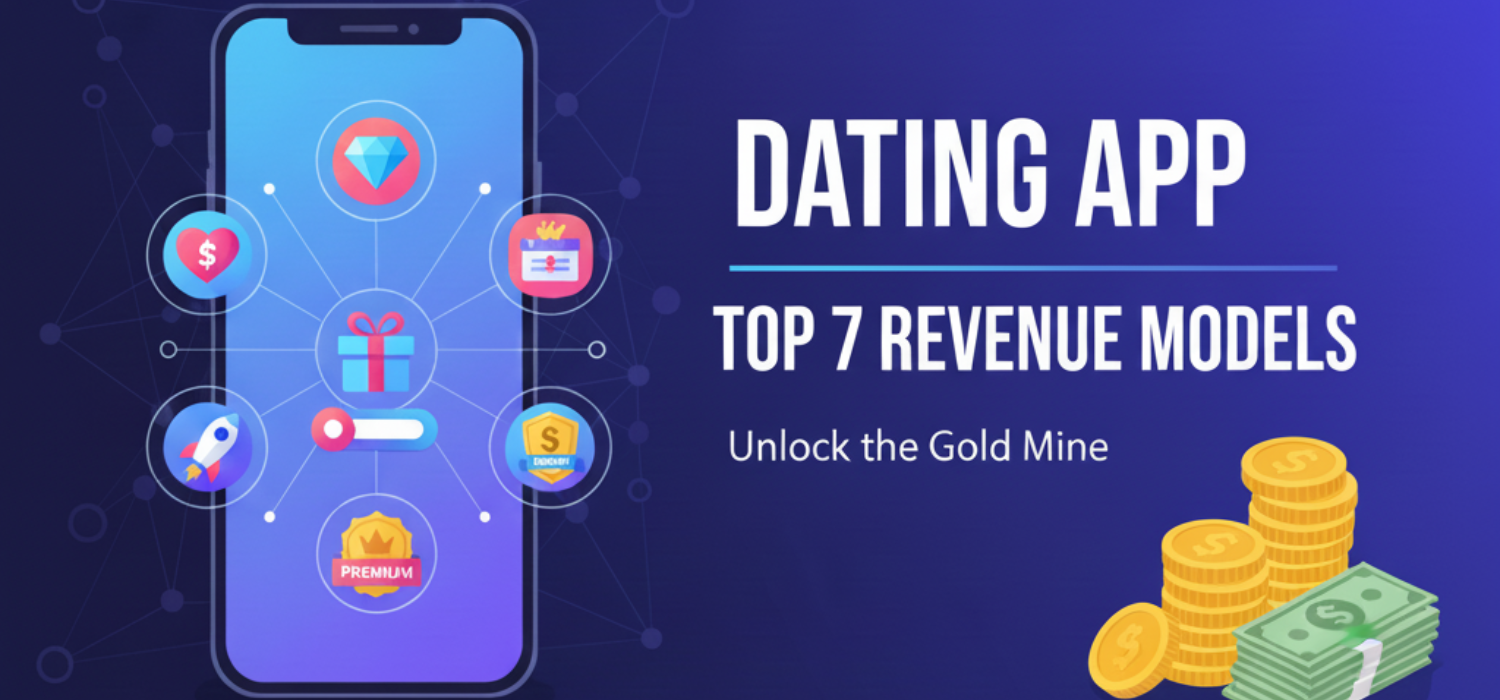
Dating App Revenue Models
A dating app is not a one-dimensional task, and its monetization is the only thing that can guarantee its success in the long term. The current level of competition in the expanding digital dating space in Dubai is quite intense, and the right revenue strategy may or may not make your app successful. Whether it’s Tinder, Bumble, or Muzz — every successful dating app in Dubai follows one (or a mix) of these monetization strategies. Here are the 7 proven dating app revenue models that can help your platform grow profitably:
Basic Free + Paid Upgrades (Freemium Model)
The freemium business model refers to a business model in which an application or service operates freely, although some extra or advanced features are priced. In other words: "Free trial version + Paid upgrade option.
This model is mostly used with dating, games, and productivity apps. The free version gives the user an impression of the app, and if they are convinced of the feature's usefulness, they upgrade.
Features
Typical paid items in dating apps that use a freemium business model may comprise:
Unlimited swipes or likes: It has a daily free user limit, but an unlimited one with paid users.
Advanced search filters: e.,g. age, distance, interests, or lifestyle preferences.
Profile boost: The profile of paid users is more visible, and matches are more likely.
Who liked your profile: Seeing who is viewing your profile is a premium service.
Advertisements: Ads are displayed to free users and not paid users.
Pros of the Freemium Model
High number of users: The free version will attract more users to the app.
Adjustable revenue: The upgraders produce predictable revenue.
Marketing advantage: Free users naturally promote the app through reviews and recommendations.
Cons of the Freemium Model
Low conversion rate: Only a small percentage of people purchase the paid version.
Expensive servers: The free users increase the server load incurred by the app.
User frustration: When the free version is not enough, users may be frustrated.
Examples
Tinder Plus / Tinder Gold: Unlimited swipes, profile boosts, and likes.
Bumble Premium: Advanced filters, unlimited swipes, and travel mode.
Subscription Model
Subscription model is a business strategy where users can access full premium features of the app by paying monthly, quarterly, or yearly fees. In Simple words: “Pay regularly, get full access.” This model is especially popular in dating apps, streaming services, and productivity apps. Users get exclusive features and a better experience at a fixed price.
Pros of the Subscription Model
Regular Revenue: Fixed fees are those that assure the company of fixed and consistent revenue.
Loyal User Base: Paid users tend to be more serious and committed.
Better Planning: With more stability in revenues, marketing and development plans can be handled more easily.
Disadvantages of the Subscription Model.
User Retention Challenge: Every time, users require regular updates and new features to keep them.
Price Sensitivity: Some users are afraid of subscription prices.
Churn Rate: In case the value of the app is low, users can cancel the subscription.
Examples
Hinge: Paid plans will offer limitless likes, superior filters, and profile boosts.
In-App Purchases
In-app purchases are a functionality within which they can buy virtual objects, credits, or other special features that can be used in an application to improve the experience. It can be used alongside free-based apps, in which the core functionality is provided gratis, with any extra features being billed.
That is, the app is free to play with, but to make this process more enjoyable, one can buy special items.
Pros of In-App Purchases
Higher Revenue per Active User: Only active users spend more as well which increases revenue.
Flexible Spending: Buyers will be able to spend to buy small or big purchases, depending on their budget.
User Engagement: Perks and special items will make the users remain active and engaged with the app.
Cons of In-App Purchases`
Few Paying Users: Few users who spend money are highly interested and engaged.
Risk of Over-Spending: There is the risk that some clients can spend too much money, which can result in a negative response.
Balance: The app developers should consider making sure that users who do not pay can use the app, and those who pay should have some additional value.
Real-Life Examples
Tinder: In-app purchases can only be made in Super Likes and Profile Boosts.
Badoo: Use credits to advertise your profile and send virtual gifts.
Sponsored Content / Advertising
One of the revenue models is advertising or sponsored content, in which advertisements are displayed to make a profit from free users. It is a simple and common game, specifically in the freemium applications. The advertisements are, however, supposed to be strategic without disrupting how the user conducts their business.
Put simply, the users are free to use the app, and the income is gained through ads in the case of free users.
Benefits of Sponsored Content / Advertising.
Monetize Free Users: The Free version also cuts revenue, which increases total profitability.
Additional Revenue Source: This is a second revenue source besides in-app purchases and paid subscriptions.
User Incentives: Reward ads will retain users and motivate them.
Cons of Advertising / Sponsored Content.
Poor User Experience: Adverts are overly and irritatingly shown, and individuals have the option to exit the application.
Balance Needed: An ideal balance should be struck between the revenue and user experience.
Click Fraud Risk: Ads must be tracked properly regarding clicks and interactions.
Examples
OkCupid: Native advertising and sponsored profiles.
Affiliate Marketing — Partner and Earn Together
Your dating application will also be able to make more income by advertising other brands that are popular with your users. You are provided with a commission when users purchase something via the links on your app.
Examples:
Arrange romantic escapes or couple vacations with the travel companies.
Recommend restaurants, cafes, or present shops as ideal date locations.
Advertise online dating or relationship workshops.
Why It Works:
Bring in extra income without changing your app’s main features.
Builds partnerships that make your app more useful and fun for users.
Pros Affiliate Marketing:
Easy to set up and doesn’t affect app performance.
Generates passive income alongside your main revenue streams.
Strengthens brand image through meaningful collaborations.
Adds extra value for users with relevant offers.
Cons Affiliate Marketing:
Income depends on user interest and purchase activity.
Too many promotions can annoy users.
Requires careful selection of trusted brands to maintain app credibility.
Event-Based Monetization — Connect Users Offline
Dating isn’t just about chatting online — people love real experiences too. Your app can host fun events and charge an entry fee.
Examples:
Speed dating nights or singles’ meetups.
Virtual dating games or relationship workshops.
Why It Works:
Builds a real community around your app.
Creates new earning opportunities beyond subscriptions.
Helps users trust your brand through face-to-face interaction.
The pros of event-based monetization are:
Enhances user usage and loyalty.
Great for brand promotion and visibility.
Multiple income sources — tickets, sponsorships, brand tie-ups.
Cons Event-Based Monetization:
Requires event planning and management.
It can be costly if not enough people attend.
Limited to certain cities or user locations.
Data Insights (B2B Model) — Sell Smart, Stay Private
Dating apps collect tons of useful data like age range, active hours, or location trends.
You can share anonymous insights (not personal data) with brands or research firms for a fee.
Examples:
Most active dating time is 9 PM.
Users aged 25–30 are most active in city areas.
Why It Works:
Earn extra money by selling trend reports or analytics.
No change to user experience — runs quietly in the background.
Pros Data Insights:
Adds a passive income stream.
No impact on app usability.
Valuable for brands, marketers, and research organizations.
Cons Data Insights:
Must strictly follow privacy rules and consent laws.
Misuse or poor handling can harm brand trust.
Requires secure data storage and management systems.
Conclusion
Creating a dating app is exciting — but turning it into a profitable business needs the right plan. The truth is, there’s no single way to earn from a dating app. The only effective thing is a clever combination of various revenue models. A freemium model is the beginning of attracting more users, and you can include subscriptions to generate regular revenue and in-app purchases or advertisements to generate additional revenue. Even more revenue can be generated by events and affiliate partnerships as your app grows. Always remember — users come first.
If people enjoy using your app and feel real value, they’ll happily pay for better features or experiences. At LoudOwl, we believe that a well-designed dating app with the right monetization strategy can turn meaningful connections into a long-term, successful business. Start smart, keep users happy, and watch your dating app grow — both in love and in revenue.