Dating through apps and websites has become an integral part of everyday life. Online dating apps and mobile dating services are used by millions of people every day, worldwide. The market of dating apps is growing further by 2025 due to mobile-first design, AI matchmaking and AI dating apps, enhanced profile verification, secure dating app registration, and changing social behavior.
Assuming that you are going to develop a dating app in 2025, this blog will expound on how to develop a modern and secure dating app, including, but not limited to, developing a dating app, the dating app technology stack (suitable dating app technology stack), dating app user interface and experience (dating app UI/UX), dating app features (dating app video call feature, dating app in-app chat), and business (dating app monetization (preemium, subscription, and in-app purchases), dating app store optimization(user attraction) etc.
Knowing the Dating App Market in 2025.
Dating apps are a sub-category of social networking sites whose primary goal is to bring people together on the internet. It is expected that by 2025, the internet dating business will pass the 10-billion mark because of the introduction of the concept of AI-based matchmaking, mobile-first dating apps, and enhancing the user experience design (UI/UX).
What modern users expect:
Safety and authenticity: Profile verification, active moderation, and real profiles.
Matches made personally:
Artificial intelligence dating algorithms that propose matches based on behavior and interest.
Unchallenged communication:
Chat, voice, and video conferencing.
Inclusivity:
Welcome everyone regardless of gender, background, or orientation.
When you develop an app keeping these expectations behind your back, then the project of creating a dating app has a greater possibility of making it in the international dating app market.
Conduct Research and Define Your Niche.
It is worth determining your niche market and target audience before you start creating dating apps. The niche determines what user category your online dating app is pursuing, and it helps determine branding and marketing strategy.
Common Dating App Niches: General dating applications: Everybody can use them, such as Tinder or Bumble, which are optimal for the general dating market.
Community-based dating apps: A dating app that targets the LGBTQ+ dating apps, pet lovers, professionals, or seniors- ideal for establishing inclusive dating platforms.
Purpose-based dating apps: Are aimed at long-term relationships, friendship, or maize dating sites.
Interest-based dating apps: Pair users based on common interests such as travel, music, and fitness etc.
Selecting a particular dating app niche will make your app unique in the online dating marketplace. It also enhances the app store optimization (ASO) and assists in attracting a faithful base of users with personalized dating app marketing campaigns.
Must-Have Dating App Functionalities.
The formula for a successful dating app development is simplicity + interactivity + security. These teen pillars have made the online dating app unique and user-friendly.
Basic Features:
Easy login via email, phone, or social media accounts.
Profile setup with photos, bio, and interests.
Smart AI matchmaking algorithm for compatibility.
Distance, age, or interest filters.
Emojis, pictures, and a voice notes chat system in the app.
On-the-fly match and message notifications.
Advanced Features (2025 Trends)
A matchmaking system powered by AI is to be better and more accurate in matching partners.
Voices and video calling to make phone calls.
Face recognition or document scanning profile checks.
Gamified experience- polls, quizzes, or interactive games to engage.
AR-based virtual dating capabilities of immersive meetups.
Reporting and blocking safety measures, as well as privacy.
Begin with the most basic features and introduce new, more advanced dating app features as updates.
Selecting the appropriate Technology Stack.
The speed of the app, its security, and scalability depend on your technology stack - and this is the core of the mobile app development process.
Tools for artificial intelligence: AWS SageMaker, TensorFlow, and OpenAI API.
Real-time chat using Firebase Realtime DB and Socket.io.
This stack will assist you in developing a rapid, stable, and scalable dating app. A mobile app development agency can assist you in the decision-making process of the optimal tools and frameworks to use in your dating app.
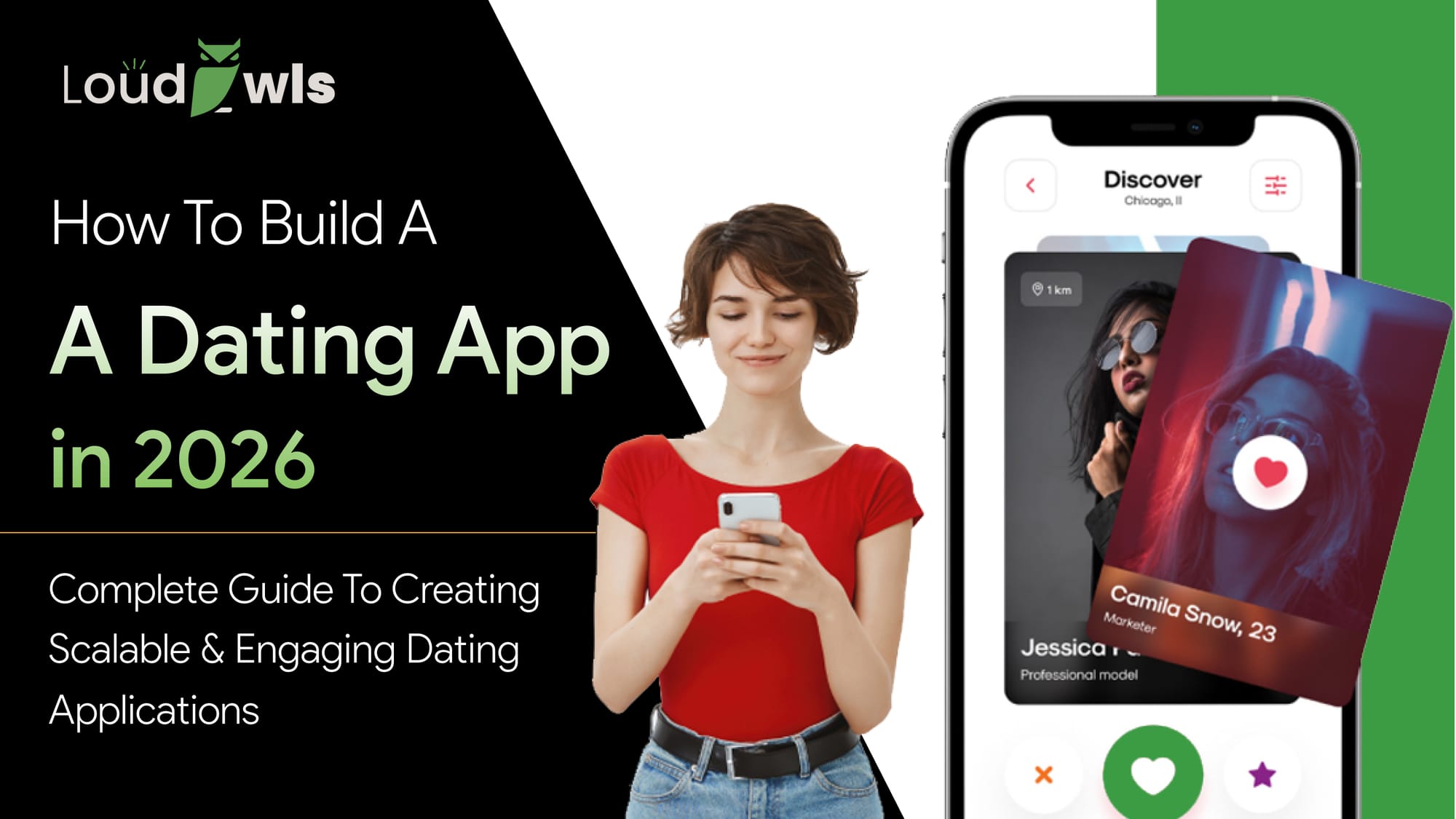
How to build a dating app in 2026
Design and User Interface (UI/UX).
The initial appearance of the dating app UI/UX design determines whether the user will use or delete the dating application. The contemporary dating applications require an easy, beautiful, and accessible design.
Key Design Tips:
The onboarding process lasts 2 minutes.
Clear design with light gradients, few icons, and vivid images.
Easy navigation, everything can be accessed with a single 1-2 tap.
Inclusive design - attractive to all sexes and orientations.
Verified badges and trust signals are utilized for guaranteeing authenticity.
The best UI/UX design tools to make a dating app are Figma, Adobe XD, and Sketch.
Lawful behavior, privacy, and security.
Online dating sites deal with personal user information, such as images, conversations, and even location. Consequently, privacy and security of data are paramount
Security Practices:
User data and end-to-end encryption of private chats.
Antifakes and antibots Profile verification.
Safe payment gateways for high-end or subscription-based dating applications.
Artificial intelligence that will screen spam, bullying, or fake accounts.
Adherence to the GDPR, CCPA, and other data protection regulations.
A powerful privacy policy and open system generate fidelity among users, and this is critical in any dating application.
Monetization Strategies
Depending on how you monetize, your dating app business model can be either free or bring in revenue.
Popular Models:
Freemium: The basic capabilities are free, and the advanced capabilities are paid.
Membership packages: Annual or monthly subscriptions.
In-app purchases: Boosts, Super Likes, and ya profile highlights.
Adverts: Non-premium users can use limited and relevant ads.
Activities: Virtual real-life paid meetups.
The balance must, however, be maintained to ensure the user experience is not compromised and the revenue is also unharmed.
Process & Timeline Development.
Stage Duration Description
Planning & Research: 2–3 weeks, to clarify the idea and the features of the app.
Design: 34 weeks, UI/UX prototyping, and visual design.
Development: 3-4 months, Frontend and Backend development with the help of modern frameworks.
Testing, QA: 3-5 weeks, Bug fixing, optimization, and checks.
Launch: 1 week, release in the App Store and Google Play.
Maintenance: Constant updates and additions of features.
The time needed to build the app depends on things like its features, how big the team is, and how complex the app is.
Testing and Quality Assurance
Before launching, every part of the app should be carefully tested to make sure it runs smoothly, is safe to use, and has no bugs.
Testing Types:
Functional testing - Make sure all buttons and workflows are functioning correctly.
Ultimativeness test - make sure that the app is user-friendly.
Security testing- Confirm user data is secure.
Performance testing - the application is stable, and it does not crash.
Beta testing - seek the opinions of actual users before the actual launch.
Testing renders the app stable and fit for the market.
User Acquisition and Marketing.
The next objective after the launch of the app is to win users. The most appropriate in 2025 are digital marketing and social media promotion.
Marketing: There are appropriate marketing strategies in place.
App Store Optimization (ASO) with the help of appropriate dating app keywords.
Social media creator marketing campaigns.
Referrals to enhance organic coverage.
Blogs and dating tips- content marketing.
The growth of the online dating market is achieved in the long term through authentic branding and user trust.
Ongoing help and app updates
The improvement of the app process is ongoing even after launch.
Post-launch Work:
Through the evaluation of user responses and bug repairing.
Introduce new features regularly (AI chatbot, badges, etc.)
Through introducing security patches.
Continued marketing activities lead to expansion.
Continuous growth = success in the dating app industry in the long term.
Dating App Construction (2025) Cost Estimate.
Category
Estimated Cost (USD)
Description
MVP (Minimum Viable Product)
$5,000-$100,000
Basic one, having the bare bones is the best to test the app idea and functionality.
Full-Functioning Dating App (similar to Feeld)
$100,000- $250,000
Full app and high-quality design, artificial intelligence matchmaking, live chat, and high customization.
Maintenance and Upgrades (Long-Term).
$5,000-15,000/month
Frequently updated, security-enhanced enhanced and scaling.
The Future of Dating Apps (2025 and Beyond).
And simultaneously, the technologies are innovating the dating business:
Artificial intelligence relationship coaching.
ID verification using blockchain.
Voice-first user experience (UX).
AR/VR virtual dating space.
Matchmaking algorithms that are based on behavior.
These are the newest trends among dating apps that can be implemented to ensure your app is future-proof and competitive.
Conclusion:
In 2025, a dating app will no longer be just coded, but also needs to understand human behavior, UX design, and data privacy. Your app can actually function, as long as you emphasize smart technology, AI-powered matchmaking, and a secure user experience. Digital dating has a very promising future- and with the help of an established mobile app development firm, you can share this future.