Fractional Real Estate Investment : The Next Big PropTech Opportunity in 2026
Article Summary
The fractional real estate investment market is transforming property ownership by allowing investors to purchase verified shares of residential and commercial assets with lower capital requirements.
Supported by regulatory developments in the UAE, Canada, and Europe, modern platforms combine blockchain technology, smart contracts, and digital compliance systems to simplify investing.
This article explores how tokenized real estate, fractional property ownership, and the modern real estate crowdfunding platform model work, what investors should evaluate before investing, and what startups need to build a compliant and scalable platform in 2026.
Introduction
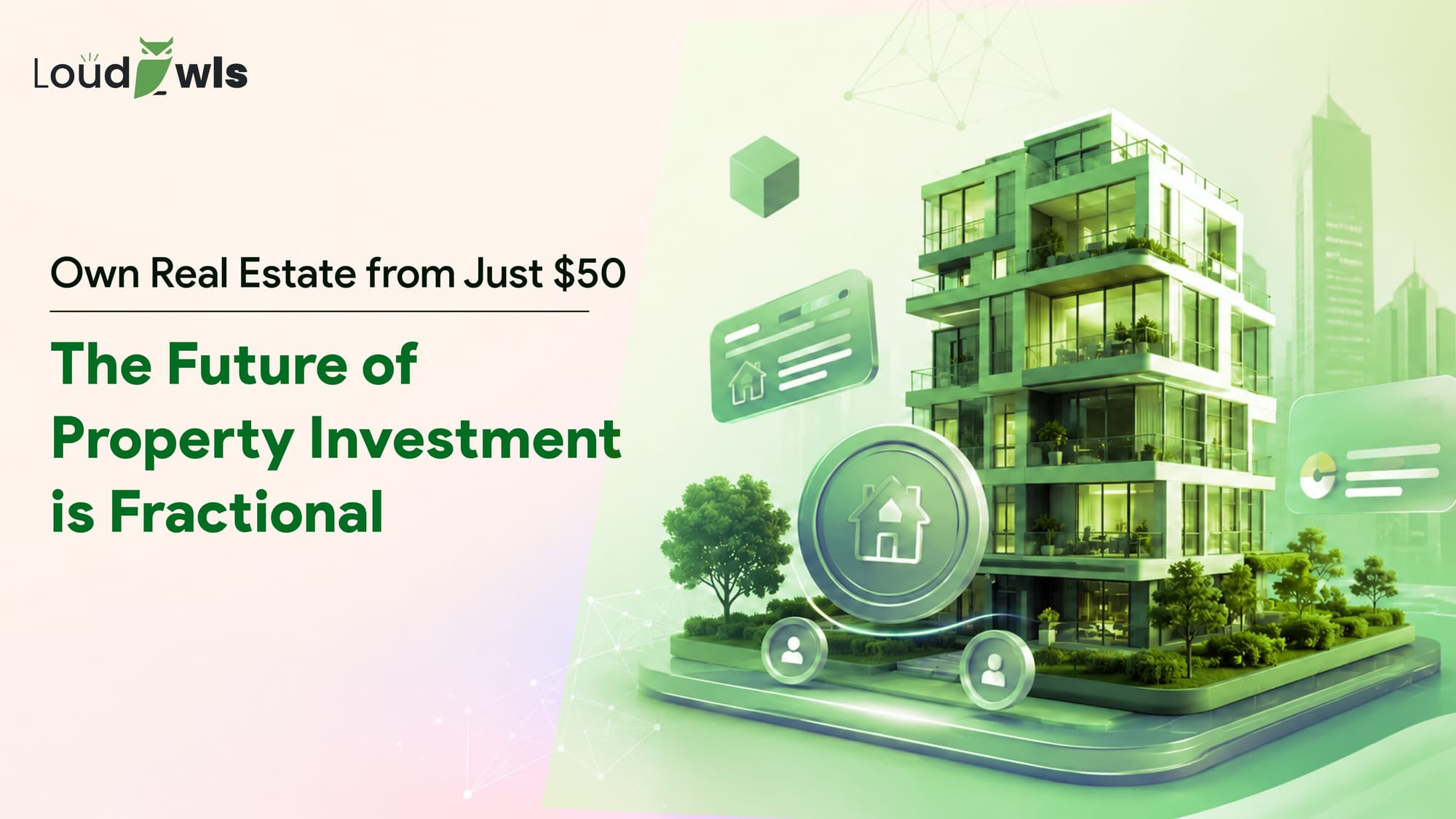
Real estate once required high capital, full ownership, and heavy paperwork, limiting access for many investors. But, fractional property investment app platforms changed this by allowing users to buy verified shares in residential and commercial properties at lower entry costs.
Markets like the UAE, Canada, and Europe are experiencing high growth, and the regulatory frameworks in these areas support the tokenization of ownership. According to Yahoo Finance, the global fractional real estate market is expected to hit above 5.4 billion dollars by the year 2026 and this indicates that it is being well adopted by investors. The technology and the timing both point toward the same opportunity, looking at its next proptech build or an investor looking at the right vehicle to enter real estate.
What a fractional real estate investment app Actually Does
A fractional property investment application enables a property to be listed, broken down into shares, and sold online so investors can own a portion and get returns in terms of rent or value increase. It operates using blockchain and smart contracts to record ownership, automate payouts, and support secondary trading, which minimize the use of brokers and enhances transparency, speed, and control of the real estate crowdfunding platform 2026systems.
The core features a well-built fractional property ownership app must include:
KYC and AML verification integrated into the onboarding flow
Property listing with verified financial data including net operating income and occupancy rates
Wallet infrastructure for holding and transferring tokenized shares
Automated rental income distribution on a set schedule
Secondary market module where investors can list and sell their shares
Regulatory reporting tools for UAE RERA, Canadian OSC, or EU ESMA compliance depending on the market
Why 2026 Is the Turning Point for Real Estate Crowdfunding Platforms
Three forces are converging this year that make real estate crowdfunding platform launches significantly more viable than they were even two years ago. More importantly, investor behaviour has also changed over the last few years. Many younger investors now prefer the digital-first investment options that are easier to access, track, and manage.
Regulatory Clarity in Key Markets of fractional real estate investment
Governments are now making it clear how tokenized real estate should work. The UAE introduced its virtual assets in 2024 under the Virtual Assets Regulatory Authority. In Canada people can crowdsource money for property with a limit. The European Union MiCA framework which came into effect in 2025 and it will make sure everyone follows the same rules. This makes things more transparent and helps companies in following the rules instead of doing things secretly.
Technology Maturity
The blockchain has turned into a more trustworthy and efficient technology. Auditing of smart contracts has been standardized and this enhances security. The Layer-2 Ethereum solutions or pre-built frameworks such as RealT offer developers a chance to develop solutions without building everything from scratch. Consequently, building a tokenized real estate platformin 2026 costs less and takes less time to create than in the past.
Rising Investor Demand
With stock market volatility increasing, investors are shifting toward alternative assets. Fractional real estate offers stable returns and lower risk exposure. As of 2026, the number of registered users across leading fractional ownership platforms globally has surpassed 6.3 million. Platforms with low entry investment attract more users quickly, making this model highly scalable and appealing.
REIT vs Fractional Ownership
Here is a direct comparison:
Factor
REIT
Fractional Ownership Platform
Minimum Investment
Price of one share (~$10-$50)
$50-$500 per property
Asset Selection
No control, the fund decides
Investor selects specific property
Liquidity
Listed on the stock exchange
Secondary market (platform-dependent)
Transparency
Quarterly fund reports
Real-time per-property data
Tax Structure
Pass-through dividends
Direct property income reporting
Market Correlation
High (trades like a stock)
Lower (tied to real estate fundamentals)
What Investors Should Know Before Choosing a Platform
Below are the points as to why the Investors Should Know Before Choosing a Platform:
Minimum Investment and Fee Structure
Real estate investing minimum investment levels vary across platforms. The price starts at $10 with Fundrise, whereas premium markets like Dubai or Toronto can cost $500 to $1,000 per share. The majority charge an annual management fee ranging from 0.5 percent to 1.5 percent and a transaction fee of 0.5 percent to 2 percent for any secondary transactions. These costs directly impact your bottom line knowing what they are is important.
Secondary Market Liquidity
Liquidity in a fractional real estate crowdfunding platform 2026investment is limited compared to publicly traded assets. You cannot exit at any time the way you do with a listed stock. Most platforms run internal marketplaces where investors buy and sell shares. How quickly you can exit depends on demand and platform activity. Before making an investment, always look at the recent transaction volume and the average time for transactions to be sold.
Jurisdiction and Regulatory Standing
Fractional real estate investment heavily depends on regulation. In the UAE, portals have to be in accordance with RERA and VARA licensing regulations. In Canada, they are required to be registered as exempt market dealers or operate under offering memorandum rules. Always check on the licensing and whether or not the platform is legally allowed to share rental income and carry out a second sale.
How Leading Platforms Compare in 2026
There are numerous players in the fractional ownership real estate app, and not all of them operate by the same rules. Here is how some of the commonly referenced platforms differ in structure and focus:
Platform
Market Focus
Min. Investment
Income Model
Fundrise
USA residential & commercial
$10
Quarterly dividends
Arrived Homes
USA single-family rentals
$100
Monthly distributions
RealT
USA (blockchain-tokenized)
~$50 per token
Weekly crypto payouts
Stake
UAE residential properties
$272 (AED 1,000)
Monthly rental income
Prypco Mint
Dubai (DLD-VARA pilot)
Varies per listing
On-chain rental distributions
Minimum fractional property investment app figures and structures may change. Always verify directly with the platform before investing. Prypco Mint is part of the official DLD-VARA tokenization pilot launched in 2024-2025.
Building a fractional property investment app Platform: What It Takes
For development teams and proptech startups consider creating or sourcing a white-label crowdfunding platform real estate solution, understanding the complexity of building it is paramount. A production-grade platform is not just a marketplace, it involves multiple interconnected technical layers working together.
A production-grade platform requires the following technical layers:
A User-facing mobile and web application with property browsing, wallet, and dashboard
A Property onboarding backend with document verification and financial data ingestion
A Smart contract layer for tokenizing properties and managing share distribution
KYC and AML integration with providers like Onfido, Jumio, or Sumsub
A Fiat on-ramp for converting investor funds before property share purchase
A Rental income calculation and automated distribution engine
A Secondary marketplace with order book and settlement logic
An Admin panel with regulatory reporting exports
A full platform can take 9-18 months to develop, depending on the number of integrations needed and the jurisdiction. The decision between a blockchain protocol like Ethereum, Polygon or a dedicated real estate blockchain has an impact on cost and long-term scalability.
How Passive Income Works on Fractional Real Estate Platforms
The passive income real estate platform is simple and structured. The platform collects rent from tenants through standard property management systems. After deducting management fees and platform charges, the remaining income is distributed to token holders based on their ownership share. Payouts are usually monthly or quarterly and credited directly to the investor’s wallet.
As an example, consider a property with a yield of 7 percent per annum with platform fees of 1 percent and management costs of 1 percent. That leaves the investor with roughly 5 percent net return annually. Capital gains are achieved when the property is sold off after 3-7 years or when the investors sell off their shares in the secondary market at a higher price.
Risks You Should Understand Before Investing
No investment is without risk, and fractional real estate is no different. The returns are nice and tidy on paper but there are some points to be aware of before investing.
The main risks to be aware of:
Platform risk: There is also platform-related risk, since investors can face difficulties getting their funds back if the brokerage company runs into legal or operational problems.
Liquidity risk: Most platforms have deep bid/ask spreads on the secondary market. If you have to go out, you may not find someone who is ready to buy, and you can expect to get less than what you normally would.
Property Risk: Unplanned maintenance expense, vacancy or a decline in the property market will have an immediate impact on returns.
Currency risk: If the platform is international, then fluctuations in the exchange rates between the home currency and the currency of the property's country can lower real gains.
Regulatory risk: The laws and regulations concerning tokenized real estate platformare still being drafted. If there is a change in local law, this may impact how a platform operates and whether they are able to continue to distribute income.
None of this makes fractional real estate a bad investment. However, they also imply that you must perform due diligence, understand the structure of the platform and invest only what you can afford.
Frequently Asked Questions
Q1. How much does it cost to start engaging in fractional real estate?
The minimum investment requirements are based on the platform and the property listed. Typical consumer-oriented platforms typically charge between $50 to $500 for each item. There are some sites that begin at $10 and others that begin at $500 to $1,000 per share in Dubai or Toronto.
Q2. What are the risks involved with real estate crowdfunding?
The main risks are illiquidity (no secondary market), platform risk (operator ceases operation or is subject to regulatory measures), and underlying property risk (from vacancy, maintenance, or loss of market value).
Q3. What is the difference between fractional ownership and a REIT?
A REIT is a collection of investor funds that invests in a fund that holds several properties and thus investors do not select individual assets. A fractional ownership platform allows investors to choose particular properties and have direct ownership in them.
Q4. Can you buy fractional real estate in UAE?
Yes. RERA, along with VARA, govern fractional and tokenized real estate in the UAE. Dubai Land Department has officially initiated a tokenization pilot with VARA, enabling small investors to buy fractional units of Dubai properties from authorized platforms legally. Platforms need to be licensed to distribute rental income and must run a secondary market.
Q5. What is the typical time period for making a profit in fractional real estate investments?
The rental income distributions can begin as early as 30-90 days after the property has been fully funded and rented. The length of the time is determined by the platform, the property's occupancy status and the payout schedule. Capital gains (if any) occur only upon selling your shares or when the platform sells the property.
Q6. Is it possible to invest in fractional real estate in the UAE or Canada?
Many platforms are open to international investors, but you may not be eligible based on the platform's licensing and your local securities laws and regulations. However, there are some platforms which are only available in certain countries because of regulatory reasons. Be sure to read the eligibility requirements and terms before enrolling, and consult a financial advisor familiar with cross-border investment rules in your jurisdiction.
Conclusion
The fractional real estate property is not a mere experiment anymore. They are emerging as a convenient method of investing in real estate. Clear regulations in markets such as the UAE, Canada, and Europe now give a solid legal foundation. Concurrently, technology is now cheaper and investors seek other stable products other than the stock market.
Whether this model works or not is no longer the question. The real question now is which real estate investment platform gets the fundamentals right before the market becomes crowded.