social commerce app
How to Build a Social Commerce App: Features, Costs and Development
Quick Summary * A social commerce app blends product discovery, social interac


Android continues to dominate the global mobile ecosystem in the dynamic world of Android App Development. According to Statista, Android holds over 70% of the global mobile operating system market share, with more than 3 billion active Android devices worldwide.
As businesses increasingly invest in android mobile app development, choosing the right programming language becomes one of the most important decisions in the development process.
The right programming language directly affects:
With multiple technologies available today, businesses and android app developers often struggle to determine which language best suits their app requirements.
In this guide, we explore the top 5 programming languages and android development frameworks that empower developers to create scalable, secure, and high-performing Android applications in 2026.
Without question, Java has been the foundation of Android app development since its birth. This time-tested programming language provides a solid and adaptable architecture that enables developers to easily design feature-rich apps. Java is a popular choice among Android developers because of its large community, huge libraries, and a multitude of tools.
Java's object-oriented nature ensures a clean code structure and facilitates code reusability. Its compatibility across various Android devices provides a consistent user experience, regardless of the hardware specifications. Additionally, the Android Studio IDE offers comprehensive tools that streamline the development process; Java is an excellent choice for both beginner and expert developers.
In recent years, Kotlin has emerged as the rising star in Android app development. Endorsed by Google as an official language for Android, Kotlin boasts concise syntax, enhanced null safety, and improved readability compared to Java. This modern language reduces boilerplate code and promotes a more expressive coding style, increasing developer productivity.
Kotlin's seamless interoperability with Java allows developers to transition gradually or mix and match both languages within a project. Its support for functional programming paradigms empowers developers to write concise and efficient code, making complex tasks more manageable. With Android Studio's robust Kotlin support, this language is rapidly gaining popularity among Android developers.
While not a traditional programming language, the Flutter framework with the Dart programming language deserves mention for its revolutionary approach to app development. Flutter allows developers to construct natively built mobile web applications from a single codebase, making it an excellent choice for cross-platform development.
Dart, Flutter's associated programming language, is designed for high-performance UI development. Its reactive programming model, combined with Flutter's widget-based architecture, allows developers to build visually stunning and responsive apps. Despite being relatively new, Flutter has gained traction due to its ability to create visually consistent experiences across platforms, reducing development time and effort.
While primarily associated with game development, C# has made its mark in Android app development through the Unity game engine. Unity's cross-platform capabilities extend to Android, enabling developers to create interactive and visually appealing applications that go beyond traditional app experiences.
Unity's powerful graphics rendering capabilities, physics engines, and vast asset store make it an ideal choice for developing engaging applications, including games, simulations, and augmented reality experiences. C# scripting in Unity provides developers with familiar syntax and a wealth of resources for building immersive Android applications that push the boundaries of creativity.
Although not as mainstream in Android app development, Python has been making strides with frameworks like BeeWare's Toga and Kivy. These frameworks allow developers to create native Android applications using Python, opening the door for Python enthusiasts to venture into the Android development landscape.
Python's simplicity and readability, combined with the versatility of Toga and Kivy, provide a unique opportunity for developers familiar with the language to explore Android app development. While not as feature-rich as some of the other languages on this list, Python's growing presence in the Android ecosystem indicates its potential for future growth.
The future of Android App Development is evolving rapidly with technologies such as:
Modern businesses increasingly prioritize scalable and high-performance Android applications to improve customer engagement and digital transformation.
According to industry reports:
These trends continue driving innovation in android development frameworks and programming languages.
In the ever-evolving world of Android App Development, choosing the right programming language significantly impacts app quality, scalability, and performance.
Whether you prefer:
Each technology offers unique advantages for different development scenarios.
Ultimately, the best choice depends on your business goals, development timeline, app complexity, and performance requirements.
With the right technology stack and experienced android app developers, businesses can create innovative Android applications that deliver exceptional user experiences and long-term digital growth.
Kotlin and Java remain the most popular choices for native Android development, while Flutter/Dart is rapidly growing for cross-platform applications.
Kotlin for android app development offers concise syntax, better null safety, improved readability, and official Google support.
Yes, java for android app development remains highly relevant for enterprise applications due to its stability, scalability, and large ecosystem.
Popular android development frameworks include Flutter, React Native, Xamarin, Unity, and Android SDK.
Yes, Flutter is widely used for scalable android mobile app development because of its cross-platform capabilities and fast development cycles.
Yes, frameworks like Kivy and BeeWare allow developers to build Android applications using Python.
Professional android app developers ensure scalable architecture, optimized performance, security, and seamless user experience.
LoudOwls offers scalable Android App Development services with expertise in Java, Kotlin, Flutter, UI/UX design, and enterprise mobile applications.
Quick Summary * A social commerce app blends product discovery, social interac
LoudOwls
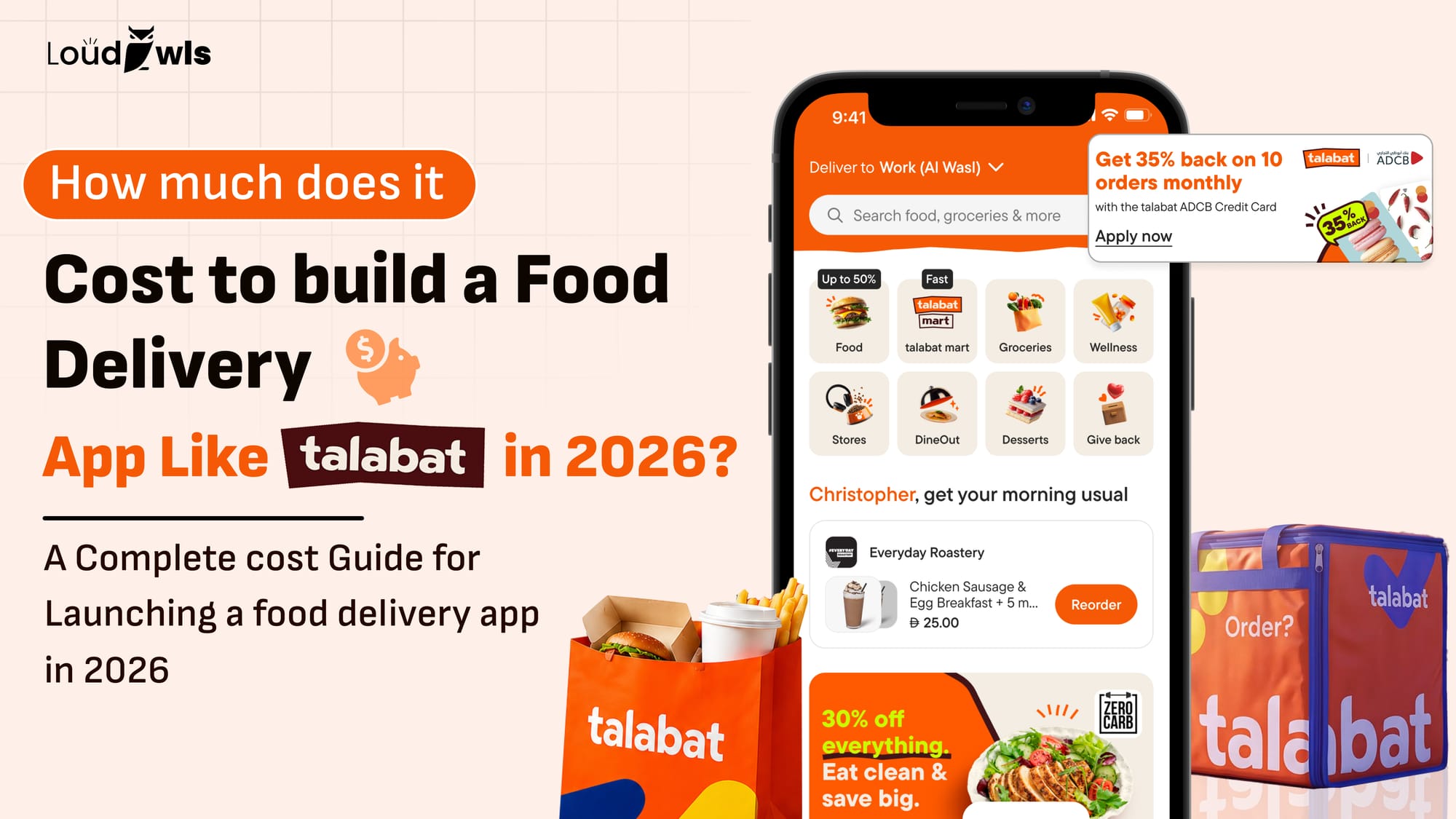
Quick Summary * Food delivery app development in 2026 ranges from roughly $20,
LoudOwls
Quick Summary * Building an AI app can cost anywhere from $15,000 to over $500
LoudOwls