Case study — Workforce Productivity

One workspace to
replace a five-tool
engineering stack

DeskTimers is an employee time tracking and project intelligence platform LoudOwls built for software teams of 5 to 50 engineers. Code activity, tasks, time and reporting — all on one shared data layer.

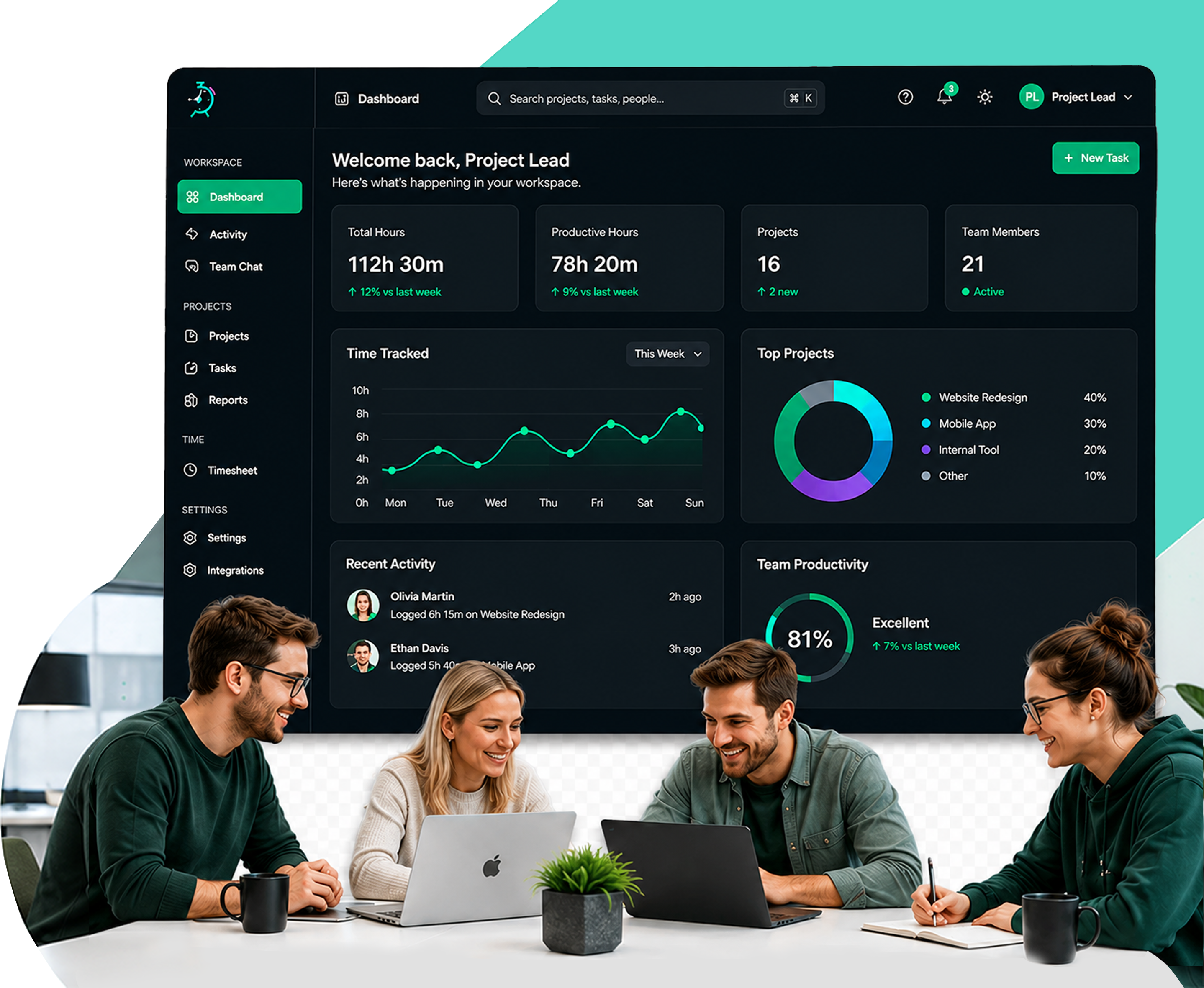
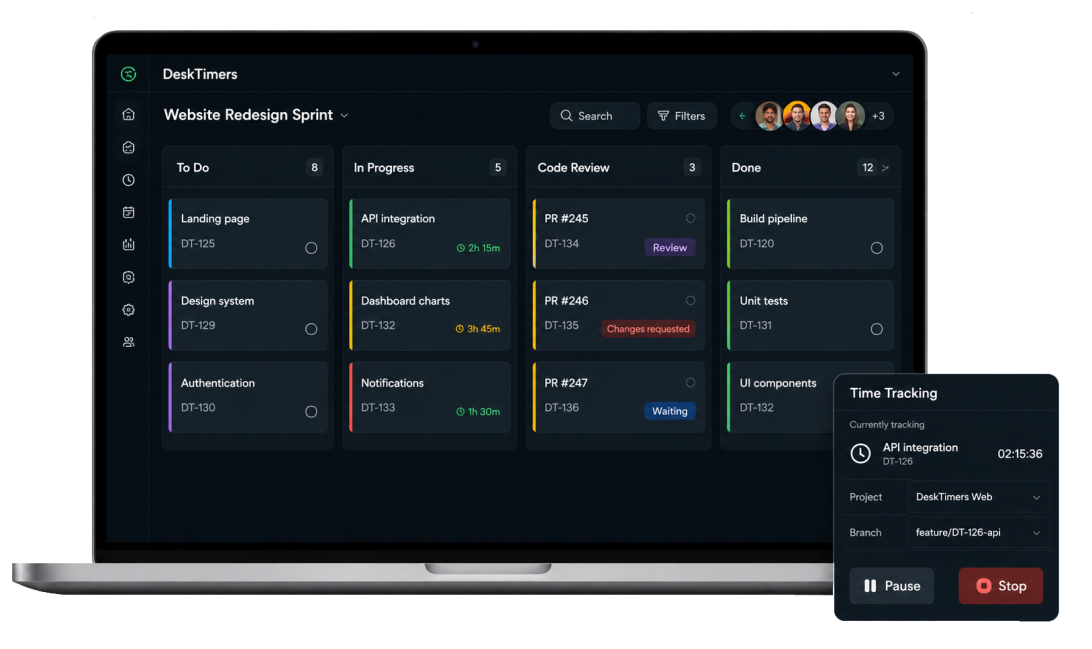
DeskTimers dashboard with live sprint board and time logs
DeskTimers v2.0 · Live
Employee time tracking·Automatic time capture·Real-time code sync·AI sprint reports·$39 / seat·SOC 2 Type I in progress·Employee time tracking·Automatic time capture·Real-time code sync·AI sprint reports·$39 / seat·SOC 2 Type I in progress·
Industry
SaaS · DevTools
Business type
B2B · Software teams
Services
Design, Development
Status
Live in production
DeskTimers platform mockup
DESKTOP AGENTSHARED DATA LAYERAI REPORTS
01 — About the project

Ending the five-tab Friday for teams that ship every day

Engineering teams run their work across five disconnected systems: a ticket board, a code host, a chat platform, a time tracker and a spreadsheet. Each is accurate on its own — none of them share context, and reconciling them is manual work that falls on the same few people every week.

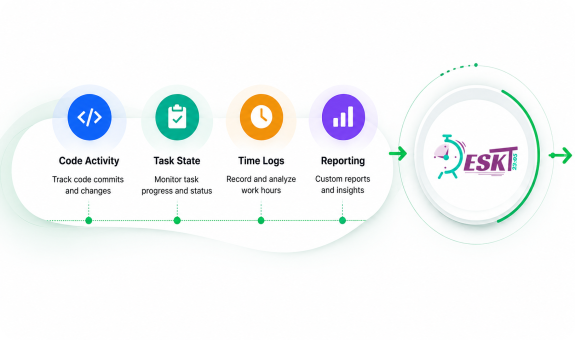
LoudOwls built DeskTimers around a single shared data layer. Code activity, task state, time logs and reporting all write to and read from the same source, so the board stays current without anyone maintaining it.

Our role
1
Product & development
Discovery, UX, and the full engineering build
2
Launch & iteration
Deployed with live teams, measured real adoption
02 — Project goals

Four things it had to do

01
Capture time automatically

IDE activity starts the timer and writes the log — no one has to remember to press start.

03
Automate weekly reporting

AI summaries generated from live data, replacing three hours of Friday assembly work.
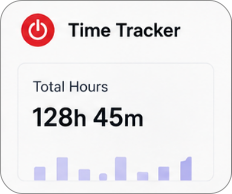
DeskTimers automatic timer screen
Timer · running
CAPTURED FROM IDE ACTIVITY
02
Keep the board current

Pushes and pull-request states update the task card, not the other way around.

04
Surface burnout earlier

Workload and mood signals combine into a warning roughly a week before anyone raises it.

Engineering manager

We had five tools doing five things that should have been one thing. Every Friday I spent three hours building a status report that should have already existed. DeskTimers changed that to seven minutes.

Engineering Manager, software studio using DeskTimers
03 — The solution

Making the work speak for itself, without anyone chasing updates

Capture without a timer — TimerTimer
Capture without a timer — Activity feedActivity feed
01

Capture without a timer

The desktop agent reads IDE activity and starts the clock on its own. The log is complete from the first day of use — not three weeks later when the habit finally sticks.

Desktop agent · IDE activity · Auto logs

Delivery was not frictionless. Time capture had to work without feeling like surveillance — so the agent tracks work signals, never screenshots, with consented on-device capture that engineers actually leave running.

Before / after

One Friday apart. Drag to compare.

The same team's status workflow, before and after — slide the handle.
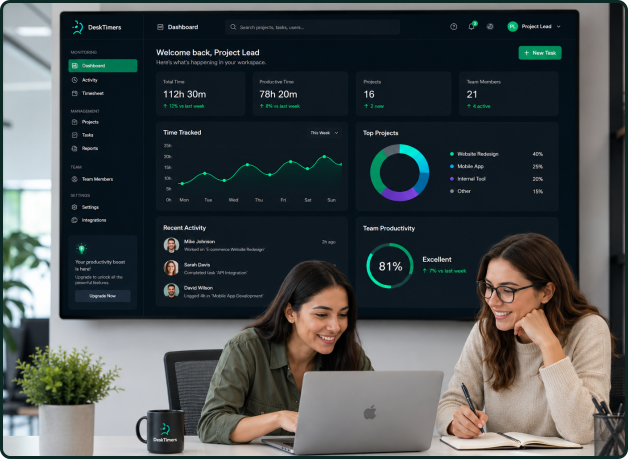
Before — five disconnected tools and a manual spreadsheet
After — one shared data layer in DeskTimers
AFTERBEFORE
04 — Impact
0
hours to first PR review, down from 30+
0min
weekly client report, down from 3 hours
0%
of a manager's week reclaimed
$0
per seat — SSO, RBAC and BYOK included

The board became the single source of truth for what actually shipped

What began as automatic time capture became the layer managers read every morning: what shipped, who reviewed it, where the hours went, and who is quietly heading for burnout.

Start a conversation →
DeskTimers enterprise dashboard

More case studies

View all work →

Kickstart your next build with us

We take on a handful of engagements at a time. Tell us what you're shipping.

LoudOwlsCase study — DeskTimers2026
WhatsApp
Email
Call