Mobile App Development Trends
Top 10 Mobile App Development Trends to Watch in 2026
Quick Summary * This blog explores the latest mobile app development trends re

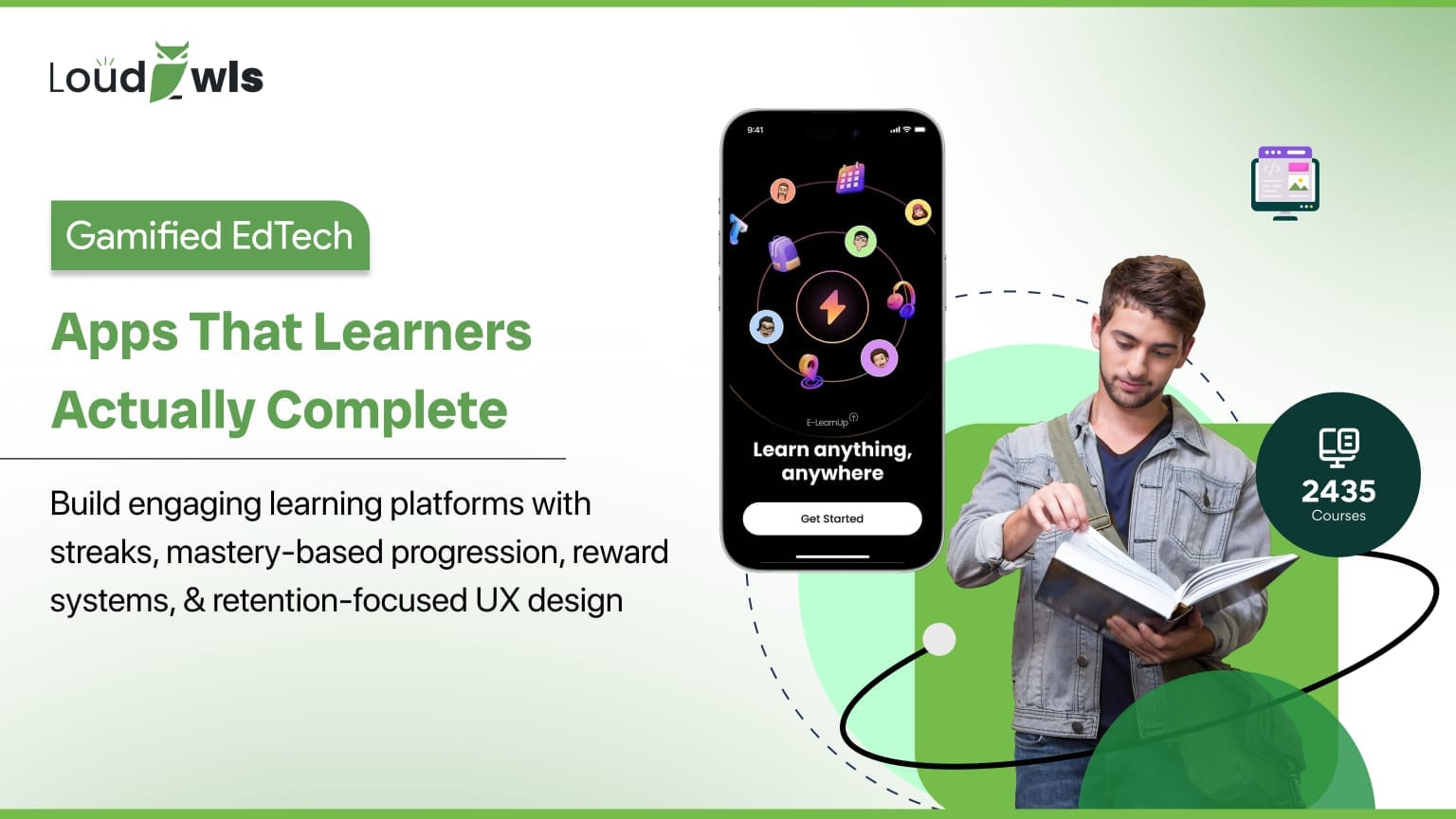

Every year, millions of people enroll in online courses with real intention. They pay, they bookmark lessons, they set reminders. And within a few weeks, most of them stop. According to research published by eLearning Industry, gamified LMS features in learning environments can increase course completion rates by up to 40% and learner engagement by 60%. That is not a marginal gain. That is the difference between a platform people stick with and one they forget.
The EdTech market across the UAE, Canada, and the EU is growing fast. By 2026, the UAE's EdTech industry will grow to USD 756 million at 16% CAGR. The market for eLearning in Canada will also expand to USD 4.4 billion by 2027. The EU digital gamification in education market crosses EUR 9 billion in 2024. In markets this size, retention is everything. And retention is a product design problem, not a content problem.
LoudOwls builds learning apps that users stay on. Here is what the right engagement design looks like.
Gamification is not making your course a game. There is a lack of understanding which results in products that seem like gimmicks. Real gamification EdTech app development is when you apply the mechanics of games to a realistic situation, to influence behavior. In eLearning, this means finishing lessons and coming back daily, and completing a curriculum.
According to Karl Kapp, a leader in this area, gamification is an implementation of game-based elements, design, and principles to capture attention, motivate action, encourage learning, and solve problems. It's more about mechanics than aesthetics.
There is also a clear difference between gamification and game-based learning. Game-based learning uses an actual game as the learning vehicle, like a simulation or role-play scenario. Gamification applies mechanics to a standard course structure. For most gamification in edtech platforms, gamifying existing content is the more practical and scalable path.
Not all gamification EdTech app development features perform equally. Some drive strong retention. Some feel good in a product demo and deliver nothing in production. Here is a breakdown of the gamified LMS features with the most evidence behind them.
A progress bar sounds simple. It is also one of the most effective engagement tools in digital products. Seeing signs of improvement and how close they are to a goal encourages learners to persevere. People tend to work faster towards a goal; this is known as the goal gradient effect, and a well-documented psychology phenomenon. The design of creating a visible gamification in e-learning journey with clear progress indicators is one of the most cost-effective returns on investment (ROI) in EdTech.

The most talked-about gamification feature in EdTech is the streak. The streak is the most discussed gamification EdTech app development feature. Turn each lesson into a daily activity and the number of turns increases. Duolingo's research team found that people with streaks were much more likely to return the following day than those without streaks. Even though there is no real prize to be won, a 45-day streak is costly when it is lost.
For platforms targeting adult learners in the UAE's corporate training market or Canada's professional upskilling sector, streak mechanics need care. The pressure that works for a language learner can feel punishing to a busy professional. Streak freezes, grace days, and recovery options are essential for adult gamification in e-learning contexts.
Points provide immediate feedback. Badges communicate accomplishment and are shareable, leading to pride and social proof. Social competition is available when you use leaderboards, and while it might be effective for some students, it can be demoralizing for others who are always at the bottom of the list.
The Nielsen Norman Group highlights a key design principle here: show relative ranking rather than absolute ranking. Telling a learner they are in the top 20% of their cohort is more motivating than telling them they are ranked 847th out of 4,000.
For EU platforms where learners span countries, leaderboard segmentation by cohort or course group is both a design best practice and a fairness consideration.
This is what separates high-retention platforms from shallow ones. Rather than letting learners proceed after completing a module, mastery-based progression requires demonstrated competency. Learners repeat content until they have genuinely understood it. This is a principle of design that LoudOwls incorporates into each of its products which is built on intrinsic motivation learning design. Extrinsic rewards are most effective when they are given for true mastery, rather than for activity.

Duolingo is the most referenced case study in gamification EdTech app development. By 2024, there were more than 500 million users of the app and 37.2 million active users each day, with the majority of the use being design rather than passive consumption.
What makes it work is not any single feature. Streaks drive daily habits. Hearts create stakes. XP and leaderboards add competition. The system is designed around a reward loop that fires at multiple frequencies, daily, weekly, and per-module, so learners are always close to their next win.
For gamification in edtech builders in the UAE, Canada, and the EU, the Duolingo model is a starting point, not a template. A corporate compliance platform in Dubai needs different mechanics than a K-12 app for Canadian students or a vocational certification tool built to EU Digital gamification in education Action Plan standards. The features are the same. The calibration is everything.
The penetration rate of smartphones in the UAE is more than 97%. The learners here are expecting fast, mobile-first experiences that have a clear connection to outcomes in their careers. Attaching badges and credentials to LinkedIn profiles or employer portals work well. The government's goal of 300,000 skilled tech workers by 2026 is another reason for a growing business training craze with cohort leader boards and certificates now having real professional weight.
Bilingualism, a high adult learner population and public initiatives such as eCampusOntario are part of the gamification in e-learning environment in Canada. Big streaks can cause stress for someone with a full-time job and school. Flexible progress tracking and mastery-based module unlocking work better here, alongside French-language interface support and accessibility compliance under the Accessible Canada Act.
The EU market is shaped by GDPR. Consent and privacy compliance should be a core part of any gamification EdTech app development element that relies on behavioral analytics. Also, the EU Digital Education Action Plan is focused on skills certification, and therefore, gamification elements related to Open Badges or national qualification frameworks are given greater value than the mere motivational elements of games.
Gamification can fail, and it is worth being direct about this. Excessive use of extrinsic reinforcement is the most prevalent mistake. If all actions are rewarded with points or badges, a learner begins to optimize for points badges leaderboards education rather than learning. They run out of content, they don't reflect, they turn off when they don't get rewarded!
However, research into self-determination theory by Deci and Ryan indicates that, when used in an unnuanced way, external motivators may come at the expense of internal ones. The fix is balanced. Reward genuine progress and demonstrated competency, not just activity. Streaks should have recovery options. Leaderboards should be segmented. Badges should mean something. LoudOwls builds this principle into every product from the first wireframe.
Building gamification features without measuring them is a mistake. The metrics that matter are daily active users, streak retention rate, lesson completion rate per session, time on platform, and badge unlock rate. A/B testing cohorts with and without specific features gives clean data on what is actually changing behavior.
For EU platforms, this analytics layer must be built with GDPR compliance from the start. Behavioral data feeding into gamification EdTech app development engines needs proper consent flows and data minimisation by design. LoudOwls builds compliant analytics dashboards into every edtech app product it develops.
For clients in the UAE, Canada and the global market, LoudOwls develops gamified LMS features and learning platforms. The team doesn't think of gamification as a set of features to include, but as an engagement architecture. Each product decision, from onboarding flow to course completion, is rooted in mechanics that facilitate learning outcomes rather than click-through.

For those thinking of starting a learning app engagement design project and seeking users who bring it back, consult with LoudOwls!
Game-based learning is a method of teaching by employing a real game and gamification is a method for applying game mechanics such as points or badges or leaderboards to an existing course to encourage learning without altering the course's content format.
These are the elements that always get the best lift: progress visualisation, daily streaks, and social leaderboards. Coins and certificates lead to sharing and social proof that is effective at attracting new learners.
Yes. Extrinsic rewards may drive learners to earn points rather than learn. The solution is to have a balance between reward and mastery based progression, so badges are earned when mastery of skills is achieved, not for how much activity occurs.
Visual rewards and team challenges are available to use freely on K-12 platforms. Real career outcomes, peer benchmarking among career groups, and credentials relevant to career readiness work best for corporate learners.
Monitor the number of daily active users, streak retention, lesson completion rate by session, time on platform and badge unlock rate. Compare 2 different groups to determine exactly what is changing behavior and what isn't.
Yes. Any behavioral analytics that gamification EdTech app development is based on needs to be GDPR compliant on EU platforms. They also value qualifications that are linked to known qualifications frameworks. Compliance needs to be the first priority and engagement mechanisms created on this basis.
Gamification should be planned during the product design phase rather than added after development. Gamified LMS features such as progress tracking, reward systems, and engagement loops work best when they are integrated into the user journey, onboarding flow, and learning architecture from the beginning.
Progress visualisation is often the highest-ROI feature because it is relatively simple to implement and consistently improves learner motivation. Progress bars, completion indicators, and milestone tracking help users see advancement toward their goals, increasing the likelihood of course completion and continued platform usage.
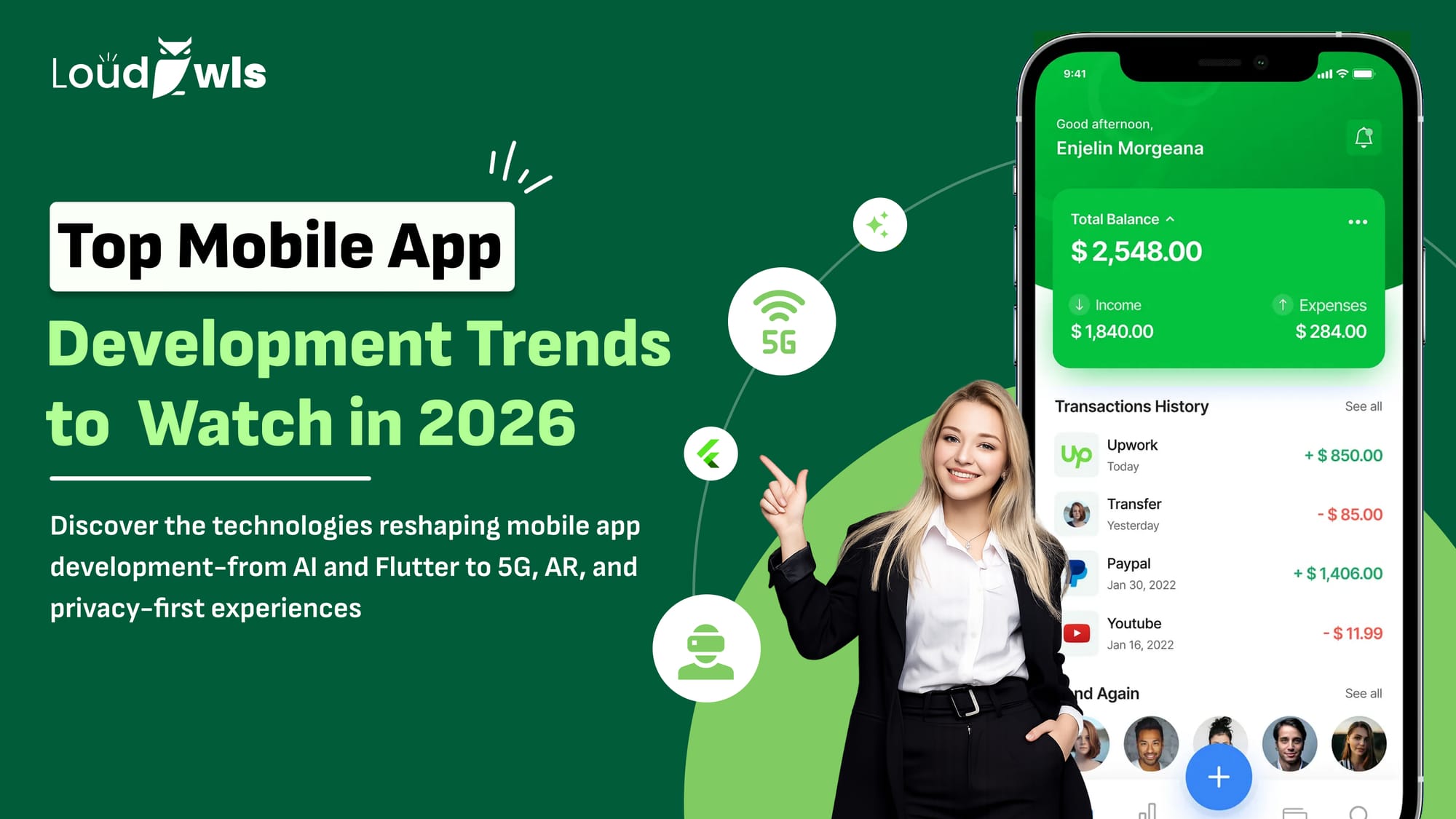
Quick Summary * This blog explores the latest mobile app development trends re
LoudOwls
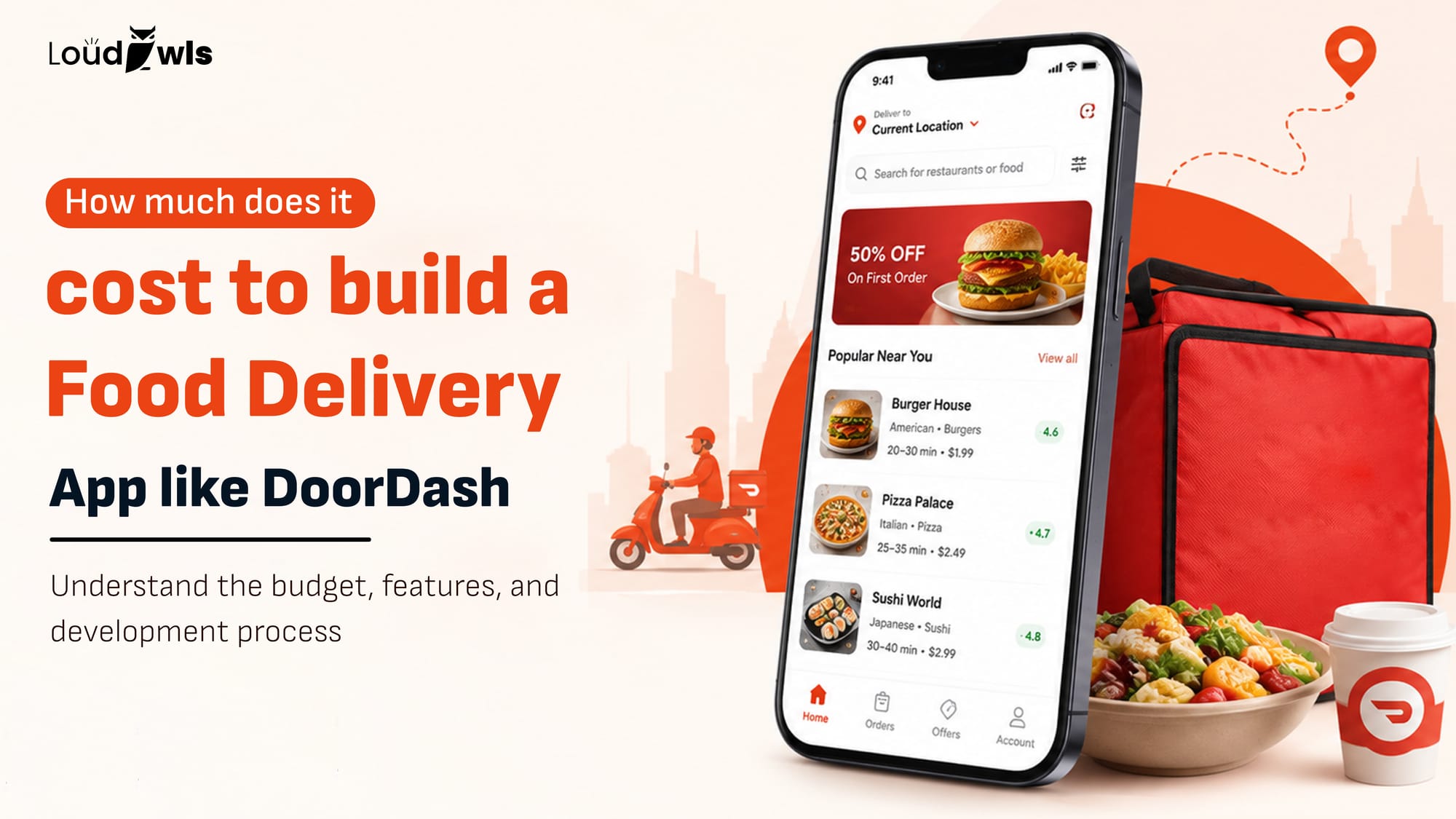
Key Takeaways ● A food delivery app like DoorDash typically costs $150,000
LoudOwls
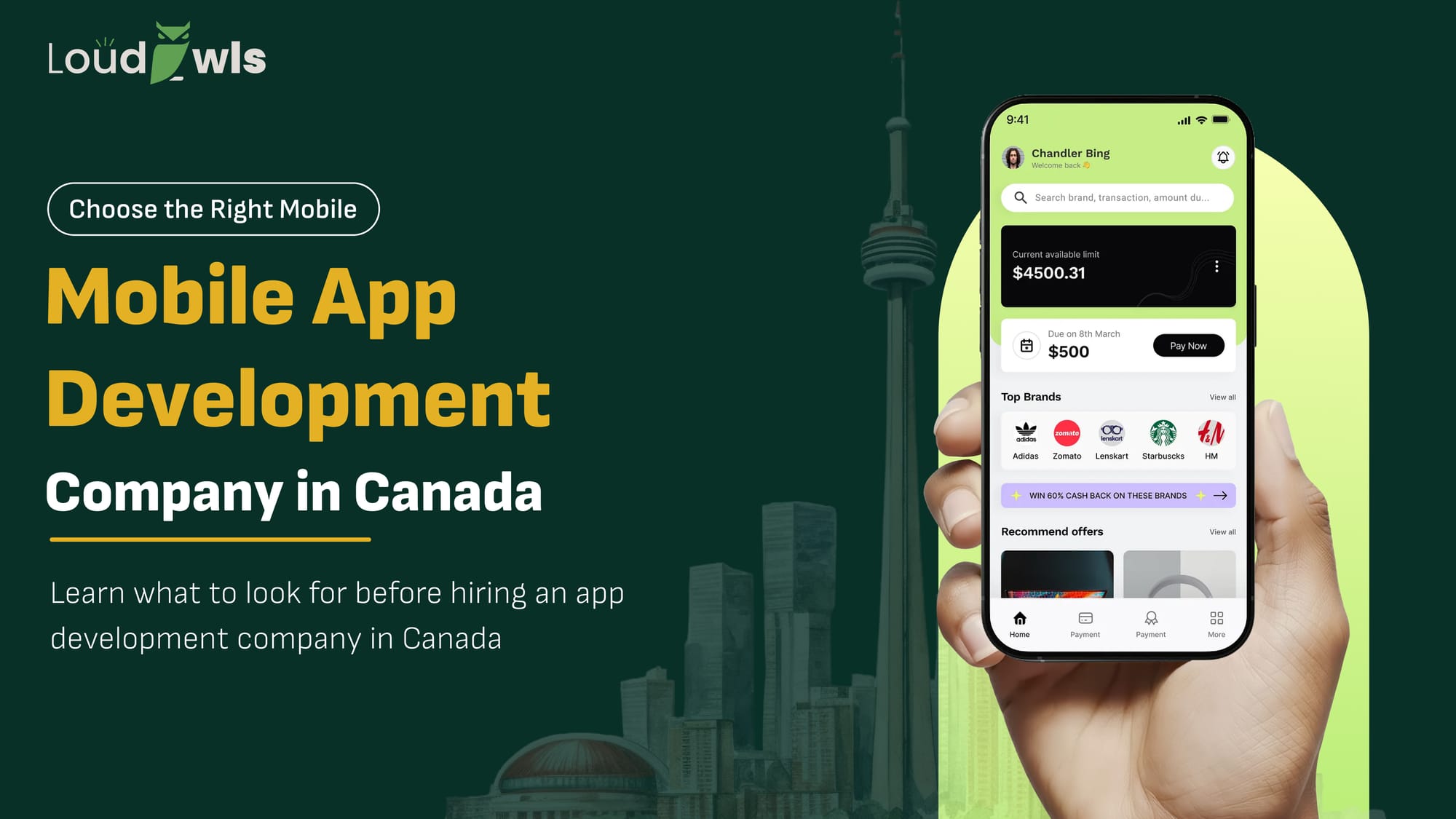
QUICK SUMMARY- * A great mobile app development company in Canada combines pro
LoudOwls