Mobile App Development Trends
Top 10 Mobile App Development Trends to Watch in 2026
Quick Summary * This blog explores the latest mobile app development trends re


Article Summary
The smart building UAE i.e. Burj Khalifa's automation systems were a genuine talking point when the tower opened in 2010. In 2026, buyers in Business Bay and Jumeirah Village Circle expect similar functionality in mid-market residential towers. The bar has shifted significantly high, and it keeps moving.
Smart building development in the UAE is not driven by trends. But, it is driven by economics. Buildings with IoT-enabled energy systems are cheaper to operate. Buildings with predictive maintenance have fewer breakdowns and service calls. Buildings with smart entry and tenant apps have lower vacancy rates. All of this is reflected on the investor's or developer's bottom line.
The UAE government is accelerating this trend. The Dubai 2040 Urban Master Plan has Smart Infrastructure targets for five urban centres. Abu Dhabi's Masdar City IoT buildings are already an IoT-connected district. Dubai Electricity & Water Authority (DEWA) has integrated more than 99 per cent of Dubai's electricity meters into a smart grid. The question for building developers and managers is whether their software is smart enough.
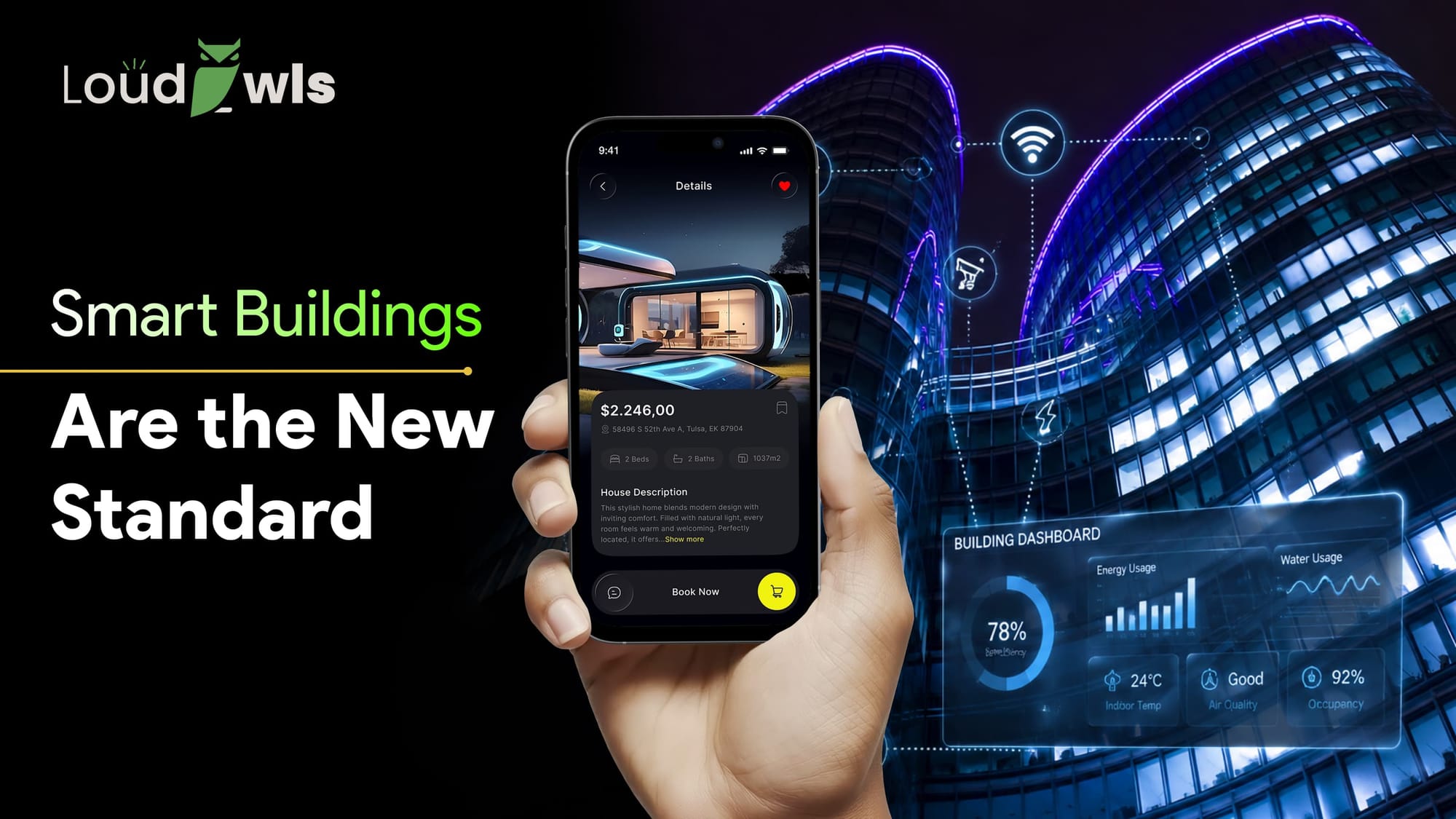
A smart building connects its core systems (lighting, HVAC, access control, fire, lifts, water) to a software layer that tracks, manages and optimises them.
In a conventional building, these systems are all separate. A problem with the HVAC system is detected when someone complains. The DEWA bill is checked monthly to monitor energy use. Door transactions are reviewed in the event of a problem. In a smart building, all of this data is continuously fed into a connected building management system that can proactively identify issues and automatically optimise settings based on people and usage patterns.
The hardware layer consists of IoT sensors. These sensors measure temperature, humidity, motion, air quality, occupancy and energy use at a fine-grained level. The information is then fed into a cloud-based system that property managers can view on a dashboard, and tenants can access via a smartphone.

Real estate developers such as Damac, Emaar and Sobha are starting to incorporate smart home technology into new residential projects in Dubai 2026 as a core offering rather than an optional upgrade.
These projects provide buyers with app-controlled lighting and climate, remote door access, energy consumption monitoring, and connections to DEWA’s smart grid. The resale values of the IoT-enabled units in the city of Dubai are recorded as 8 to 12 per cent higher than those of similar non-connected units in the same building, according to transaction records in the Dubai Land Department analysed by a property platform in 2025.
IoT connectivity has become a prerequisite during lease negotiations by DIFC, Downtown Dubai, and Dubai Internet City grade A commercial tenants. An integrated building management system allows tenants to see their energy consumption by floor, manage meeting room climate and lighting via an app, and building management to see occupancy data, which they use to plan cleaning schedules, security deployment, and utilities more effectively.
The IoT property management software is gaining widespread adoption across hotels and in retail malls. Footfall sensors provide information for retail analytics services. HVAC systems automatically adjust depending on the number of people in an area.
Hotel room systems are responsive to guest references, which is documented in the loyalty app. The operational savings can be measured in all these instances, and the improvement in tenants’ or guests’ experience is trackable.
Smart buildings offer measurable advantages for both developers and investors. Lower energy consumption reduces operating expenses, while predictive maintenance helps avoid costly equipment failures. Enhanced tenant experiences often lead to higher occupancy and stronger lease renewal rates. Smart features can also increase property value, improve sustainability performance, and make assets more attractive to institutional investors seeking long-term returns.
Despite the benefits, smart building adoption comes with challenges. Integrating multiple systems from different vendors can be complex and time-consuming. Initial setup costs may be significant, particularly for older properties requiring upgrades. Data security and privacy must also be carefully managed. Success depends on selecting the right software platform, ensuring system compatibility, and providing adequate training for facility management teams.
The Dubai 2040 Urban Master Plan provides a framework for sustainable urban development across 5 different urban centres: Deira and Bur Dubai, Dubai Internet City and Downtown, Dubai Marina and JBR, Expo City and Deira Islands. Each of these development zones has smart infrastructure integrated into it, rather than being an optional overlay.
For developers with projects in these areas, compliance with smart building UAE is not optional. The buildings should be designed to reach the standards of energy efficiency, which is only possible with the IoT-based HVAC and lighting system. The requirements for digital twin construction in the UAE are being proposed for large-scale commercial projects, where a live digital representation of the building must be established and utilised to manage the facilities since the first day of occupation.
The best example of what this would be like at the scale is Masdar City in Abu Dhabi. The entire district is connected by a system of IoT sensors that control energy, transport, water, and waste in real time. The integration of the DEWA smart grid across Dubai implies that smart buildings will be able to join the demand response programs, automatically minimising consumption during the busy hours and earning credits on their utility bills.
The predictive maintenance real estate IoT applications track the building equipment performance and alerts when a component is under stress and likely to fail. A chiller running at 4 per cent below its baseline value gets checked 2 weeks before it would have completely collapsed. A lift motor exhibiting abnormal vibration patterns is scheduled for maintenance before it stalls between the floors.
The economic case is simple. The cost of emergency HVAC repair in Dubai during summer may reach AED 50,000, including parts, emergency call-out, and the cost of affected tenants. Here's a friendly heads-up: if the building stays online, the scheduled maintenance check will only cost a tenth of what it would if it goes offline. This way, you can plan accordingly and save some resources.

These below statistics are reported by the known results of IoT implementations in commercial and residential projects in the UAE and GCC region. The individual output depends on the building age, size, and the quality of the software implementation.
Want to see what a custom smart building platform would look like on your asset? Schedule a 30-minute scoping call with the LoudOwls team focused on your building, your tenants, and your operating model.
LoudOwls is a Dubai-based PropTech development firm that develops bespoke IoT property management software, tenant apps, building automation dashboards, and digital twins to real estate developers, facility managers and property investment companies in the UAE, Canada and the US.
The UAE market is not a hardware gap. Connected systems, smart meters and sensors are broadly accessible. The software that bridges all that hardware is actually the gap that makes it work together and be integrated into a single platform that fits the particular building, the particular tenant profile and the specific model of operation of the property manager that is running it.
An average LoudOwls smart building project includes:
The average project duration is 10-24 weeks, depending on the complexities of the buildings and the quantity of systems to be integrated. Pricing ranges from AED 180,000 for a focused residential tower app to AED 900,000 or more for a full-scale commercial IoT platform with digital twin capability.
Q1. Why do investors prefer smart buildings in the UAE?
Investors prefer smart buildings because they lower costs, improve tenant retention, and deliver stronger long-term returns through efficient, data-driven operations.
Q2. What does IoT do for property managers?
IoT provides property managers with live information on energy, equipment and occupancy. This leads to fewer emergency maintenance requests, lower energy costs, and faster problem resolution. Issues are identified early, driving down costs and ensuring tenant comfort.
Q3. How will the Dubai 2040 Master Plan impact smart cities development?
The Dubai 2040 Urban Master Plan sets energy-efficiency and smart infrastructure requirements for development across five zones. Bigger commercial developments must now incorporate digital twin and IoT building management into their planning. Planning for these areas should include smart systems from the outset.
Q4. How do smart buildings reduce operating costs?
Smart buildings continuously monitor energy usage, equipment performance, and occupancy levels. This allows property managers to optimize resources, reduce energy waste, lower maintenance expenses, and improve overall operational efficiency.
Q5. What is predictive maintenance in smart buildings?
Predictive maintenance uses IoT sensors and data analytics to identify equipment issues before they become major failures. This helps reduce emergency repair costs, extend asset lifespan, and minimize disruptions for tenants and occupants.
Q6. Can existing buildings be converted into smart buildings?
Yes. Most existing residential, commercial, and mixed-use properties can be upgraded with IoT sensors, smart meters, access control systems, and building management software without requiring a complete redevelopment of the property.

Smart building development in the UAE in 2026is a property management, tenant retention, and regulatory compliance issue as much as it is not about technology. Buildings in Dubai 2040 zones need to meet energy and infrastructure standards that only the IoT system can deliver. Commercial tenants are making it a leasing requirement. And the ROI data from completed UAE projects is clear.
The hardware is largely taken care of. Smart sensors and smart meters are everywhere, and the UAE is connected to DEWA's electricity grid. Whether a building is smart or simply well- equipped depends on the software that ties those systems together and makes it useful for its users, the managers and occupants of the building.
LoudOwls provides that software for real estate developers, facility management and investment firms in the UAE and beyond. If you are planning for an upcoming project that needs to include IoT real estate UAE from the beginning, the best place to start is by discussing your building and what your occupants expect.
Contact LoudOwls now to arrange a low-cost project scoping session and explore what a smart building platform looks like for your specific asset.
Quick Summary * This blog explores the latest mobile app development trends re
LoudOwls
Key Takeaways ● A food delivery app like DoorDash typically costs $150,000
LoudOwls
QUICK SUMMARY- * A great mobile app development company in Canada combines pro
LoudOwls