AI app development cost
How Much Does It Cost to Build an AI App in 2026? A Complete Guide
Quick Summary * Building an AI app can cost anywhere from $15,000 to over $500


The mobile app industry continues to evolve at an incredible pace. With emerging technologies reshaping user expectations, businesses must adapt quickly to remain competitive. According to recent market reports, global mobile app revenues are expected to surpass $780 billion by 2029, while smartphone users worldwide are projected to exceed 7.5 billion.
As businesses increasingly rely on digital experiences to engage customers, understanding the latest mobile app development trends is essential for long-term success. From artificial intelligence and machine learning to 5G technology and immersive experiences, the future of mobile app development is more innovative than ever.
In this article, we explore the top mobile app development technologies and trends that are shaping the industry in 2026.
Mobile apps are no longer just digital tools—they are critical business assets. Whether it's eCommerce, healthcare, fintech, education, or logistics, companies are investing heavily in mobile solutions to improve customer engagement and operational efficiency.
These numbers highlight why businesses must continuously update their mobile app development strategy to remain competitive.

The landscape of mobile app development is about to change as 5G technology becomes more widely used. With its higher network capacity, decreased latency, and faster data transfer rates, 5G will present new opportunities for app developers. Mobile apps that make use of 5G capabilities will proliferate, offering customers seamless experiences and improved performance.
The app development industry has already seen the impact of artificial intelligence (AI) and machine learning (ML), but these technologies still have more room for growth. AI-powered mobile apps are expected to advance and become more individualized in 2026. These technologies will greatly increase user engagement, from chatbots providing excellent customer service to recommendation systems powered by AI that customize content for specific users.
AR and VR are not just for gaming anymore. In 2026, expect mobile apps that leverage these technologies to offer immersive and interactive experiences across various industries, such as retail, healthcare, and education. From virtual try-ons for fashion products to AR-guided navigation systems, the possibilities are endless.
The Internet of Things (IoT) is all about interconnected devices, and its integration with mobile apps will continue to grow in 2026. Mobile apps will serve as a central control hub for IoT devices, enabling users to manage their smart homes, wearables, and other connected gadgets conveniently and efficiently.
Voice-enabled technology is rapidly gaining popularity, and 2026 will witness a surge in mobile apps incorporating voice interfaces. Voice commands and interactions will become more accurate and natural, making it easier for users to interact with apps hands-free. Additionally, voice commerce will revolutionize the way we shop online, with users making purchases using just their voice commands.
As the number of mobile app users grows, so does the concern for data security and privacy. In 2026, mobile app developers will focus on enhancing security measures to protect user data and privacy. Biometric authentication, advanced encryption, and secure data storage will become standard practices in app development.
Instant Apps and Progressive Web Apps (PWAs) provide a seamless app-like experience without the need for users to download and install them. In 2026, more developers will adopt these technologies, as they offer faster load times, reduce storage consumption, and improve user retention rates.
Blockchain technology's decentralized nature provides enhanced security and transparency for various applications. In 2026, we can expect to see more mobile apps integrating blockchain for secure transactions, data verification, and improved user trust.
With a growing awareness of environmental issues, sustainable app development will gain traction in 2026. Mobile apps will focus on energy efficiency, reduced carbon footprints, and eco-friendly features to attract environmentally conscious users.
Health and wellness apps have been popular for a while, but in 2026, we'll see a more comprehensive approach to personal health management. Mobile apps will incorporate advanced sensors, AI-driven health tracking, and personalized insights to help users take better care of their physical and mental well-being.
The future of mobile app development in 2026 is being shaped by 5G technology, artificial intelligence, machine learning, augmented reality, IoT, blockchain, and enhanced security solutions. Businesses that embrace these innovations will be better positioned to meet evolving customer expectations and stay ahead of competitors.
Whether you're launching a startup application or scaling an enterprise solution, staying updated with the latest mobile app development trends is essential for long-term success. The companies that invest in modern mobile app development technologies today will lead the digital landscape tomorrow.
The most significant trends include AI and machine learning integration, 5G technology, augmented reality, IoT connectivity, voice interfaces, blockchain adoption, and cross-platform development.
Artificial intelligence enables personalization, predictive analytics, chatbots, automation, fraud detection, and improved customer experiences across various industries.
5G technology offers faster speeds, lower latency, and improved network performance, enabling richer app experiences and real-time functionality.
Cross-platform development allows developers to build applications for both Android and iOS using a single codebase, reducing costs and development time.
No. AR and VR are increasingly used in retail, healthcare, education, real estate, manufacturing, and training applications.
Businesses can implement biometric authentication, encryption, multi-factor authentication, AI-based threat detection, and secure cloud infrastructure.
Quick Summary * Building an AI app can cost anywhere from $15,000 to over $500
LoudOwls
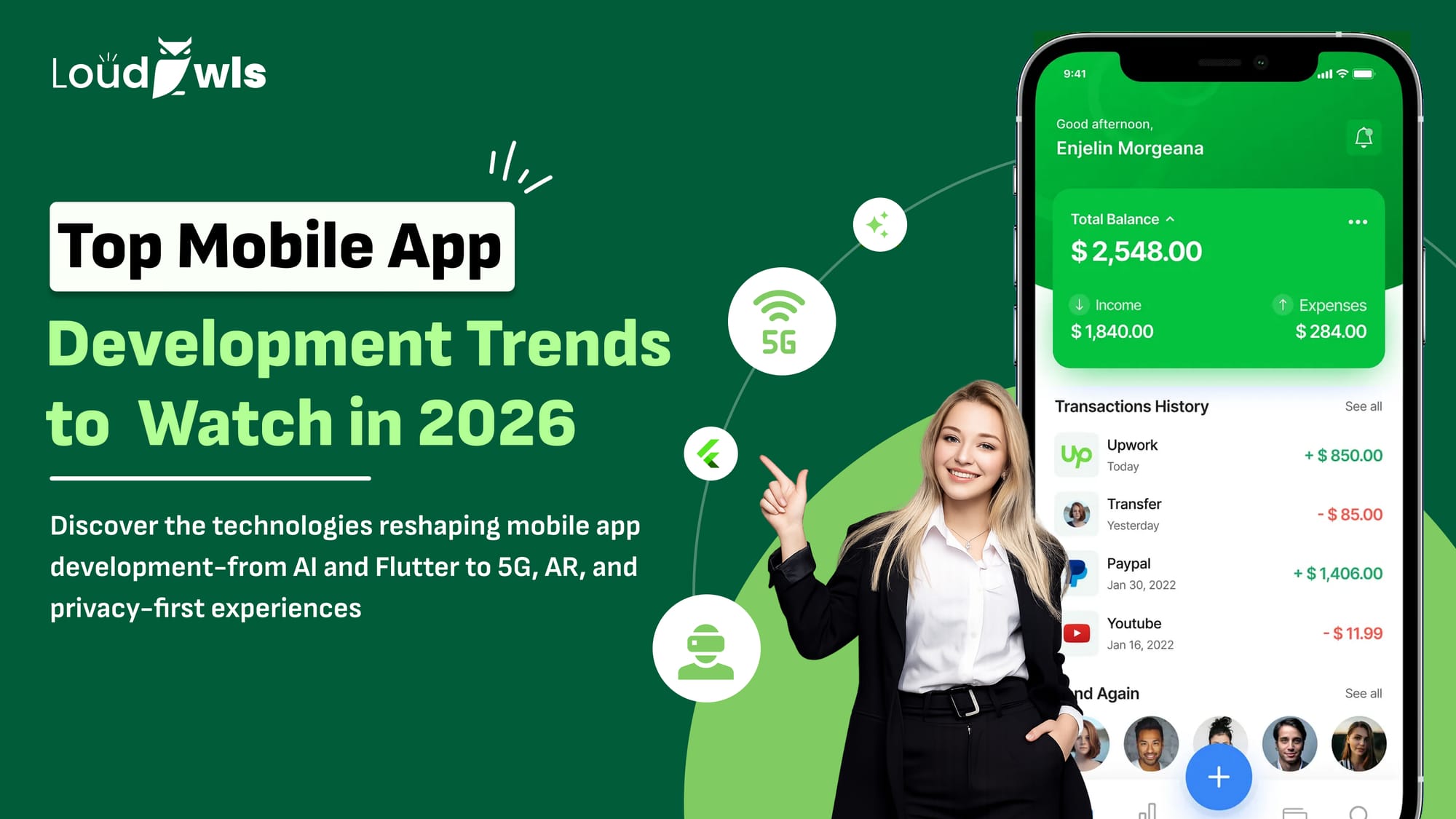
Quick Summary * This blog explores the latest mobile app development trends re
LoudOwls
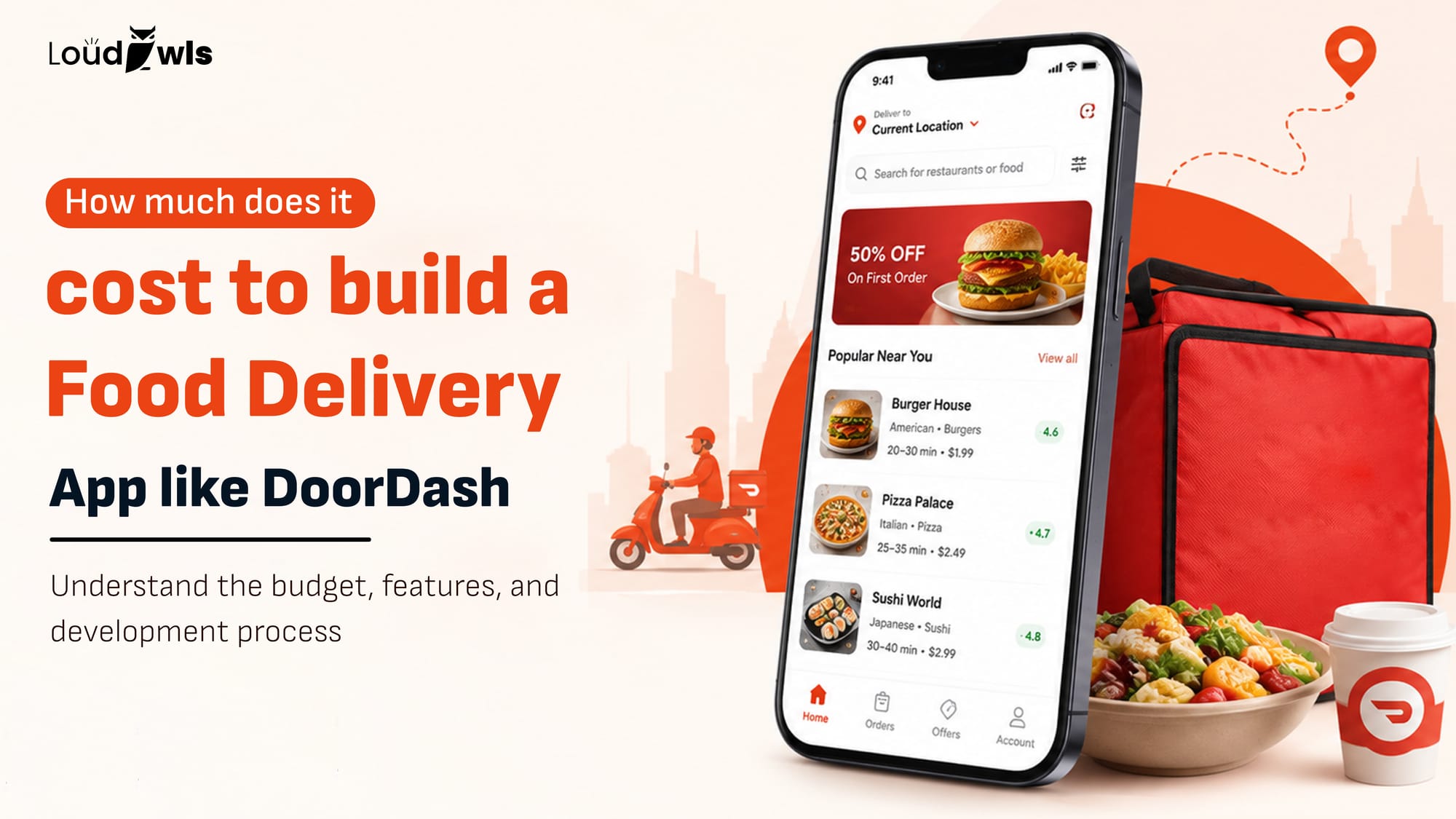
Key Takeaways ● A food delivery app like DoorDash typically costs $150,000
LoudOwls