Vibe Coding in 2026: What Founders Need to Know
Vibe coding refers to a software development approach where users describe their requirements in everyday language and AI tools generate the corresponding code.

Pardip Bhatti
·9 min read
bg green: Brief Overview
- Vibe Coding in 2026: Learn how AI coding tools can help founders quickly create and test app concepts.
- Trends and Technologies: Explore the latest coding trends and AI-driven technologies shaping software development.
- Advantages and Disadvantages: Discover where vibe coding works well and where it faces limitations.
- Vibe Coding vs. Custom Development: Understand which approach fits different stages of the startup journey.
- Scaling Your Application: Identify when to move from an AI-generated prototype to professional custom app development.
This guide explains how founders can use vibe coding effectively, avoid costly development pitfalls, and choose a strategy that supports long-term business growth.
What Is Vibe Coding?
Vibe coding refers to a software development approach where users describe their requirements in everyday language and AI tools generate the corresponding code.
For entrepreneurs, the biggest advantage is speed. Instead of building a complete development team immediately, founders can turn an idea into a functional prototype, test it with users, and refine features using simple AI prompts.
This makes vibe coding 2026 particularly useful for early-stage product validation, MVP development, and experimenting with new business ideas.
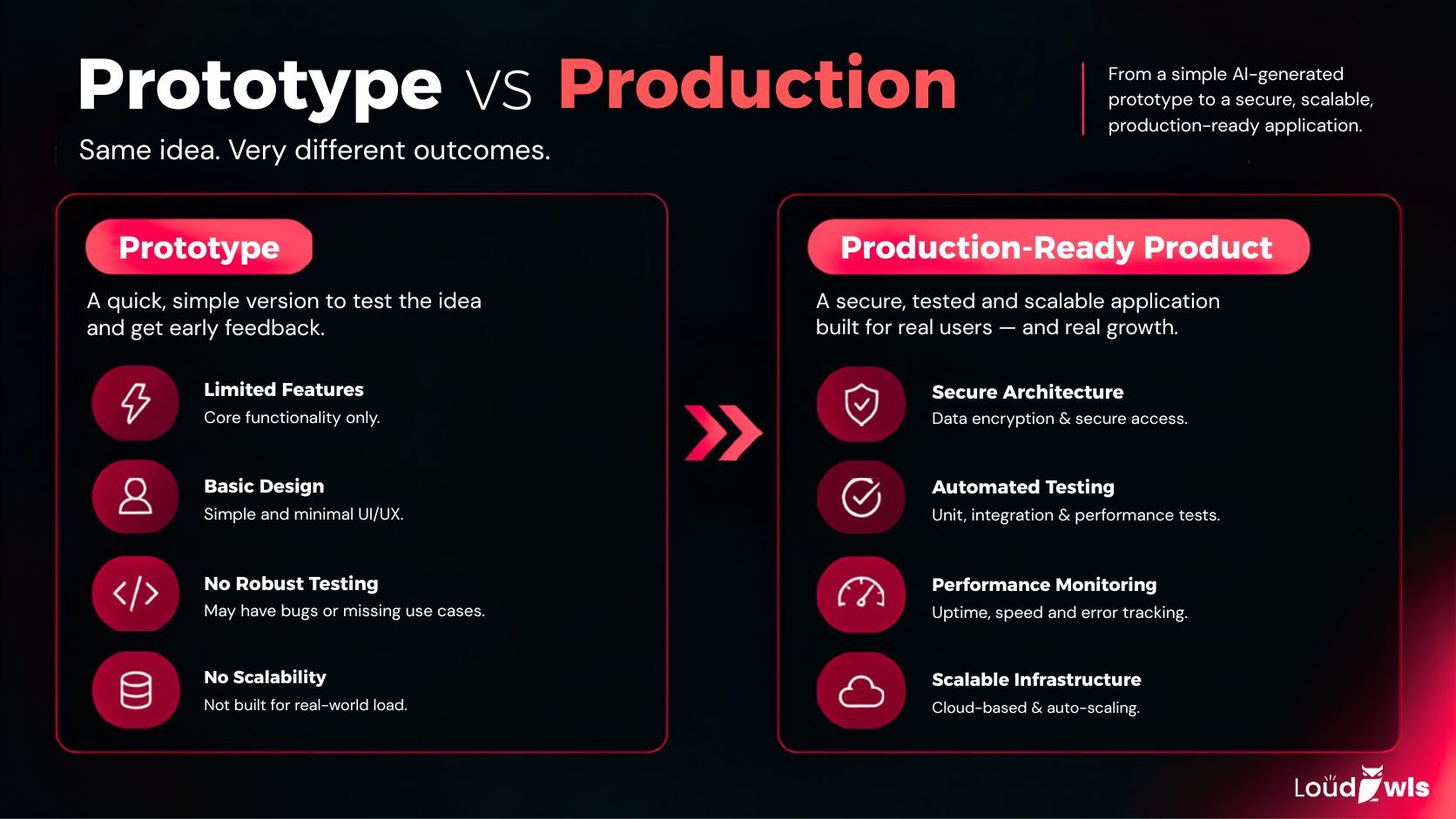
However, AI-generated code is not automatically secure, scalable, or production-ready. Founders need to understand where vibe coding works effectively and when professional development support becomes necessary.
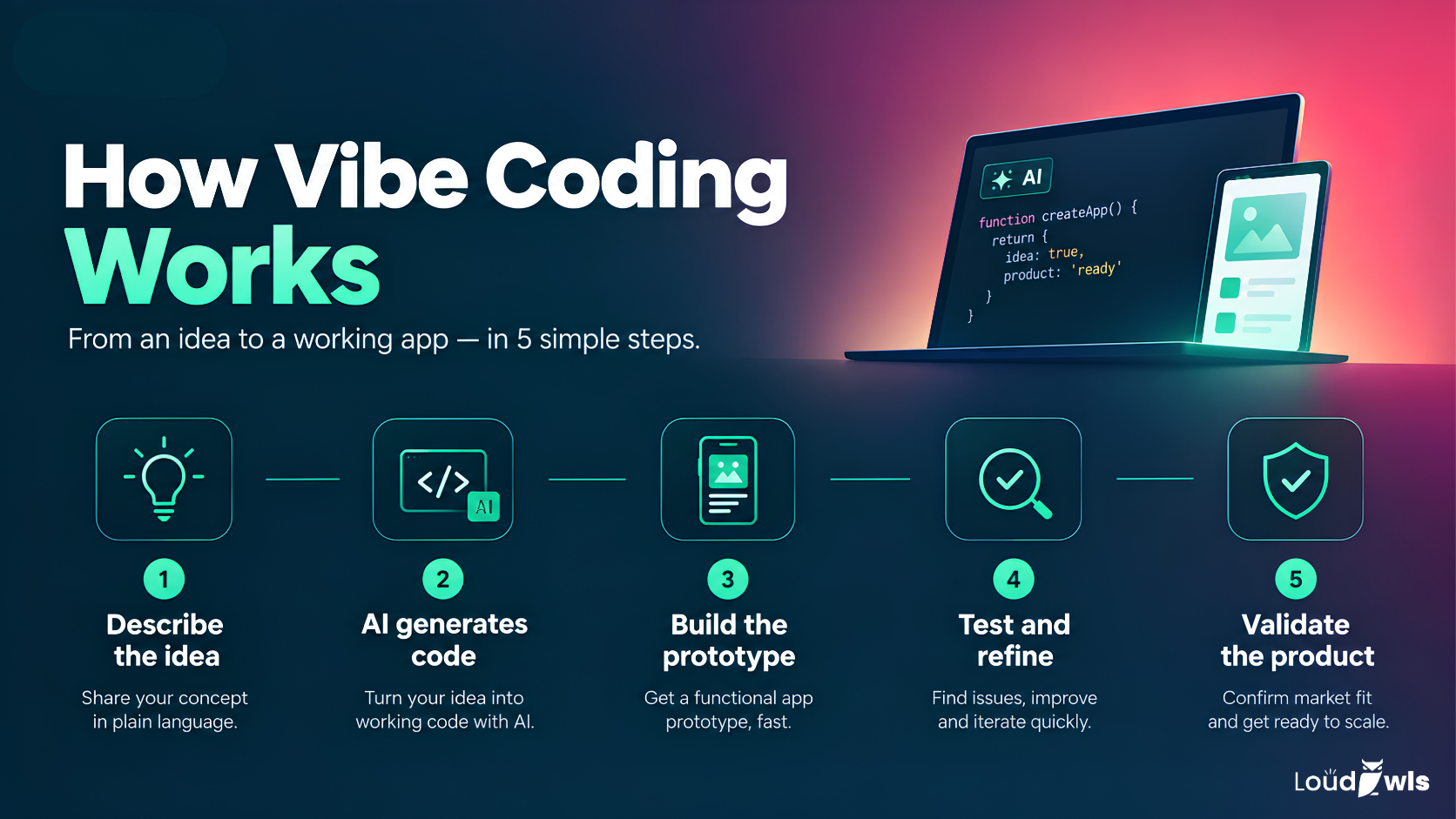
How Does Vibe Coding Work? A Step-by-Step Guide
The process is straightforward:
- Describe your idea in simple language.
- Use an AI coding tool to generate the application.
- Review the output and identify required changes.
- Improve features through updated AI instructions.
- Validate the idea before committing significant development resources.
Example Prompt
Build a food delivery app with restaurant listings, menus, a shopping cart, checkout, and order tracking.
AI can generate initial screens, application logic, and supporting components. Founders can then review the result and refine the product through additional prompts.
The outcome depends on the quality of the instructions, the selected AI coding tool, the complexity of the requirements, and the level of technical review.
Best AI Coding Tools for Vibe Coding in 2026
Different development stages require different tools. Some platforms are designed for rapid prototyping, while others provide more control over codebases and development workflows.
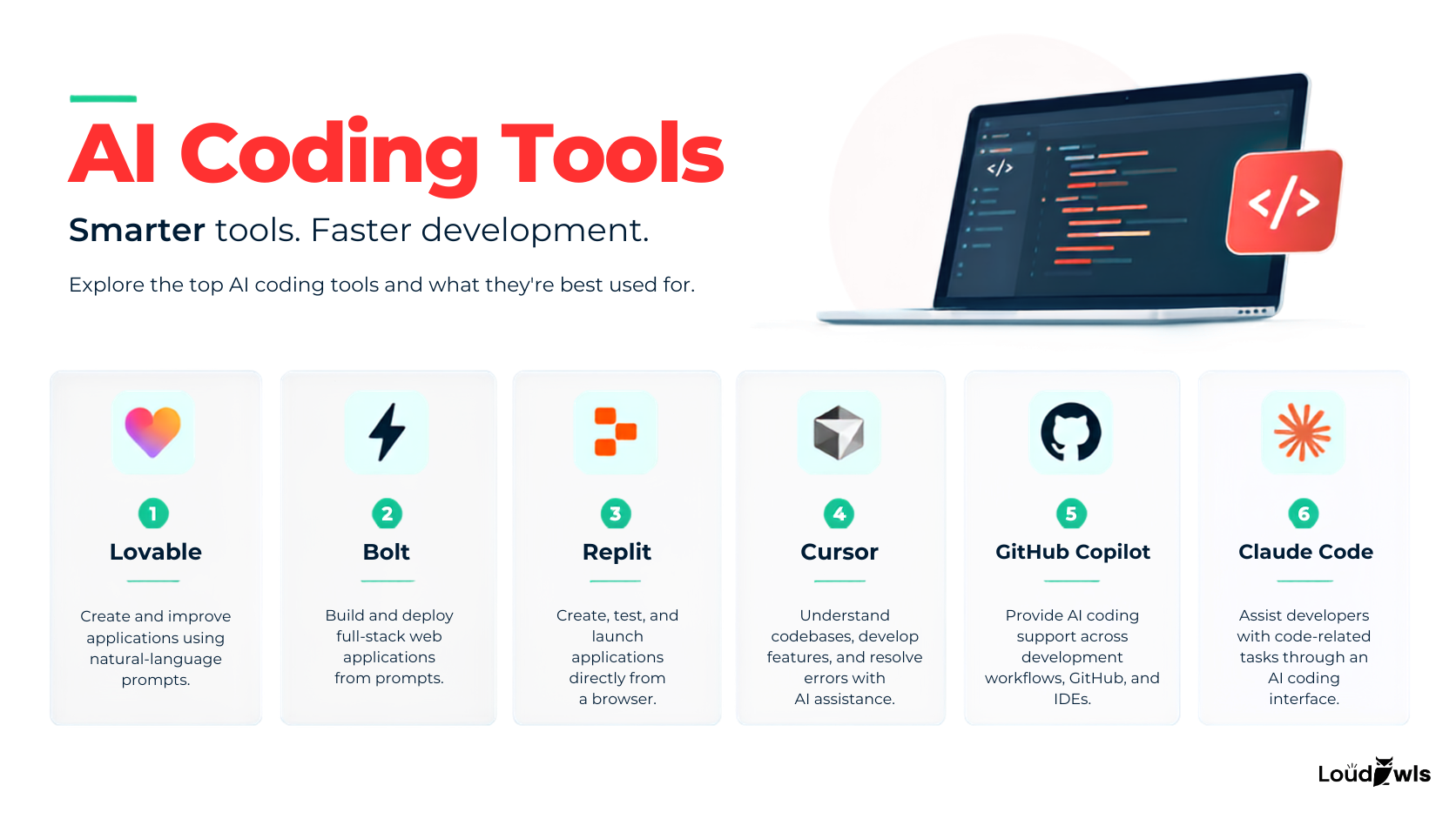
The right tool depends on the product requirements, technical complexity, preferred development workflow, and the amount of control needed over the code.
Can You Build a Real App With Vibe Coding?
Yes. Vibe coding can help turn an idea into a working application. However, building a prototype is different from creating a secure, reliable, maintainable product that can scale.
Vibe Coding Is Particularly Useful For:
- Validating a startup idea before making a larger investment.
- Building an MVP or clickable prototype.
- Testing user flows and product features.
- Collecting early user feedback.
- Creating simple internal or business tools.
- Demonstrating a concept to potential investors or stakeholders.
As the Product Grows, It May Require AI-Assisted Software Development Alongside Experienced Developers For:
- Code review and architecture.
- Security and data protection.
- Complex API and third-party integrations.
- Performance optimisation.
- Scalability planning.
- Ongoing maintenance and reliability.
- App Store and Play Store readiness.
Applications that handle payments, sensitive information, complex business logic, or large user volumes generally require a stronger technical foundation than a quick AI-generated prototype.
A practical approach is to use vibe coding for early validation and move to custom app development when the product is ready to launch or scale.
Vibe Coding vs. Custom App Development: Which Approach Fits Your Product?
The practical choice is not always AI versus developers.
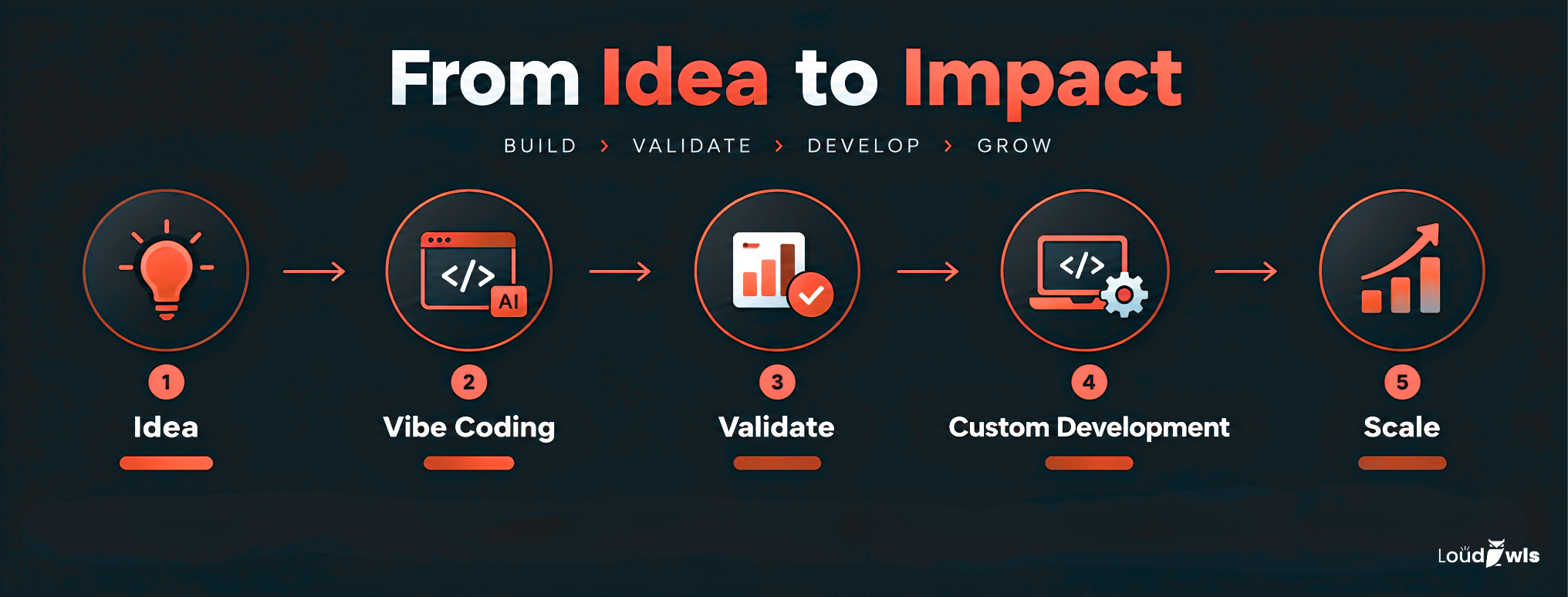
For many startups, the development journey can look like this:
Idea → Vibe Coding → Validate → Custom Development → Scale
This approach allows founders to use AI to build faster and validate ideas earlier, while bringing in experienced developers when the product requires a stronger technical foundation.
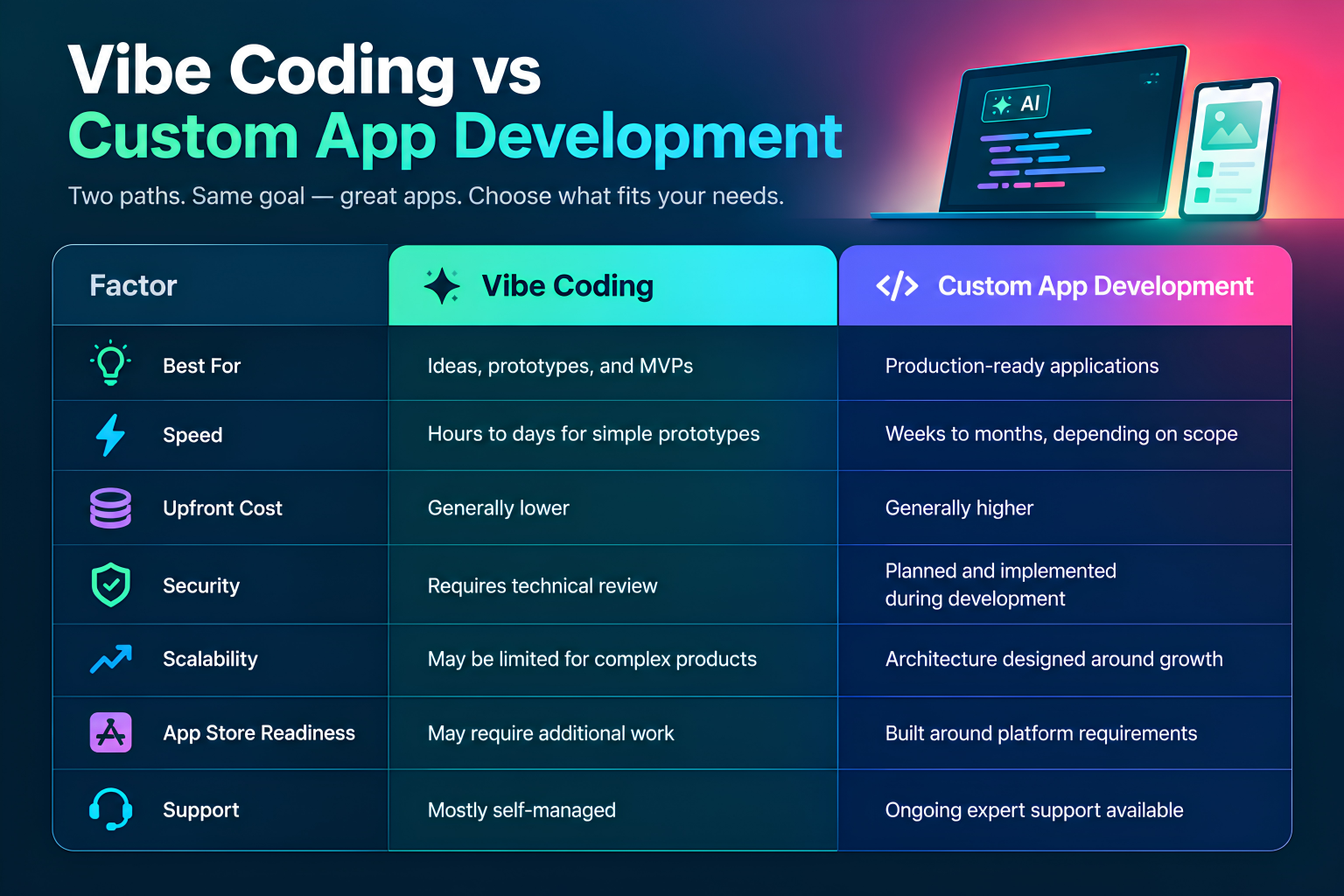
Choose Vibe Coding If You Want To:
- Test a startup idea quickly.
- Build an MVP or investor demonstration.
- Experiment with features and user flows.
- Collect feedback from early users.
- Create a simple internal tool.
Choose Custom App Development If You Need:
- Secure payments or sensitive user data.
- A product designed for growing users.
- Production-ready iOS and Android applications.
- Complex APIs and integrations.
- Advanced business logic.
- Custom AI features and functionality.
- Long-term maintenance and technical support.
The Practical Approach
You do not always have to choose one approach over the other.
- Vibe coding helps you start faster.
- User validation helps confirm whether the idea solves a real problem.
- Custom development helps build a secure and scalable product.
- AI-assisted development can support speed and productivity throughout the development process.
Vibe coding can be a fast starting point—not always the final product.
Advantages and Limitations of Vibe Coding
Vibe coding can help founders move from an idea to a working prototype quickly. However, as an application becomes more complex, some limitations can become harder to manage.
Advantages of Vibe Coding
1. Faster Development
AI coding tools can help create simple prototypes and test product ideas in a short period.
2. Lower Initial Investment
Founders can validate an idea before committing to a larger development budget.
3. Accessible to Non-Technical Founders
Users can describe features in natural language instead of writing every line of code manually.
4. Faster Iteration
Features and user flows can be changed through additional prompts and instructions.
5. Early Product Validation
Founders can collect feedback from users before investing in a complete product.
Limitations of Vibe Coding
1. Security Concerns
AI-generated code may contain vulnerabilities or unsuitable data-handling practices if it is not reviewed.
2. Scaling Challenges
A prototype may not perform effectively when user numbers, features, and transactions increase.
3. Code Quality Issues
Unreviewed code can become difficult to understand, maintain, and modify.
4. Mobile App Limitations
Production-ready iOS and Android applications may require additional development, testing, and optimisation.
5. Complex Requirements
Payments, advanced integrations, real-time features, and custom AI functionality often require experienced developers.
6. Potential Rework
Rebuilding or restructuring an AI-generated prototype later may increase development time and cost.
When Should You Move From Vibe Coding to Custom Development?
Vibe coding is useful during the early stages of product development. However, when your app begins gaining users, handling sensitive data, or supporting complex features, it may be time to consider professional custom app development.
7 Signs Your App Is Ready for Custom Development
1. You Have Real Users
Your application needs to handle growing traffic and user activity reliably.
2. You Handle Payments or User Data
Security, privacy, and data protection require proper technical planning and implementation.
3. Your App Is Slow or Unstable
Performance problems can become more difficult to fix as the application grows.
4. Fixes Keep Creating New Bugs
Unstructured or poorly reviewed code can make maintenance and feature updates challenging.
5. You Are Ready for the App Store or Play Store
A prototype may require additional work to meet platform requirements and deliver a reliable user experience.
6. You Need Complex Features
Advanced APIs, real-time functionality, third-party integrations, and custom AI development may require experienced developers.
7. Your Business Is Growing
As users, revenue, and product requirements increase, a scalable technical foundation becomes more important.

What Happens When You Move to Custom Development?
A professional AI software development company can help you:
- Review your existing prototype and code.
- Retain useful components and rebuild weak areas.
- Improve security, architecture, and performance.
- Add complex integrations and custom AI functionality.
- Prepare the product for web, iOS, and Android.
- Establish testing and quality assurance processes.
- Provide ongoing maintenance and technical support.
Vibe Coding Trends to Watch in 2026: What’s Next for Founders?
The future of vibe coding is moving beyond basic prompt-to-code tools. AI coding agents are increasingly supporting activities such as planning, coding, testing, debugging, and code review.
1. AI Will Handle More Development Tasks
AI coding agents are taking on more parts of the software development lifecycle, from generating code to assisting with testing and review.
What this means for founders: Product ideas can be explored and tested faster, with less manual coding required for early experimentation.
2. Developers Will Work More Closely With AI
AI-assisted software development can improve development speed while keeping human oversight for architecture, quality, security, and business logic.
What this means for founders: Businesses can benefit from AI-powered coding while still relying on experienced developers for critical decisions.
3. Security Will Become More Important
As AI-generated and agent-generated code becomes more common, security, governance, and validation will become increasingly important before applications reach production.
What this means for founders: Code should be reviewed before an application handles payments, sensitive data, or large numbers of users.
4. Vibe Coding Will Move Closer to Production
AI tools are expanding from simple prototypes toward broader application delivery, including mobile development, integrations, testing, and deployment.
What this means for founders: More parts of an application may begin with AI, but complex products still require strong engineering practices.
5. Custom AI Development Will Continue to Matter
Startups are increasingly exploring AI agents, automation, personalisation, computer vision, and voice-based functionality.
Some products will require custom AI development instead of relying only on off-the-shelf prompts or tools.
What this means for founders: AI coding tools can help validate the concept, while professional AI development services can provide greater control, customisation, and scalability.
Why Choose LoudOwls for AI App Development?
Your vibe-coded prototype may have helped validate your idea. The next step is turning that prototype into a product that people can use and trust.
LoudOwls helps startups move from an idea or AI-built MVP to secure, scalable digital products through AI development services, custom software development, and experienced engineering support.
What You Get With LoudOwls
- 250+ projects delivered for startups and enterprises.
- 150+ clients across 20+ countries.
- 4.9/5 client rating.
- Expertise in iOS, Android, Flutter, and React Native.
- Custom AI development for chatbots, machine learning, computer vision, and voice features.
- AI-assisted development to improve productivity while maintaining technical oversight.
Additional Support Included
- 3 months of free support after launch.
- Free App Store and Play Store publishing.
- 3 months of marketing guidance.
- Transparent pricing with no hidden fees.
Conclusion
Vibe coding has changed how quickly startups can turn ideas into working prototypes. However, a prototype is only the starting point.
A practical approach is to:
- Use AI coding tools to test and validate your idea.
- Get expert review before handling real users, data, or payments.
- Move to custom app development when you are ready to launch and scale.
- Use AI-assisted development to improve speed while maintaining technical quality.
You do not have to choose between AI and experienced developers. Use AI for speed and professional development for security, scalability, and long-term growth.
Whether you have a new idea or an existing vibe-coded MVP, LoudOwls can help you move toward a production-ready digital product.

Frequently Asked Questions About Vibe Coding
1. What Is Vibe Coding in App Development?
Vibe coding means using AI coding tools to create software by describing features in plain language. It helps founders build and test app ideas without writing all the code manually.
2. Can You Build an App With Vibe Coding?
Yes. Vibe coding can help create a working prototype or MVP quickly. For a secure, scalable product, you may need custom app development and experienced developers.
3. Can Vibe Coding Be Used for Mobile App Development?
Yes. AI can help create mobile app prototypes using technologies such as Flutter or React Native. Production-ready applications usually require professional development, testing, and optimisation.
4. Can I Use Vibe Coding for Android App Development?
Yes, vibe coding can be used for basic Android applications and prototypes. A production Android app may require expert work related to device compatibility, security, performance, and Google Play requirements.
5. What Is the Difference Between Vibe Coding and Custom App Development?
Vibe coding focuses on using AI prompts to build and test ideas quickly. Custom app development focuses on creating secure, scalable, and maintainable software for real-world use.
6. Is Vibe Coding the Same as AI Software Development?
No. Vibe coding relies heavily on AI-generated code from prompts. AI software development combines AI coding tools with experienced developers who manage architecture, testing, security, and complex requirements.
7. What Are the Best AI Coding Tools for Vibe Coding?
Popular tools include Lovable, Bolt, Replit, Cursor, GitHub Copilot, and Claude Code. The right tool depends on whether you need a quick prototype or greater control over the codebase.
8. Can Vibe Coding Be Used for App Design?
Yes. AI tools can help create screens and UI concepts from prompts or references. Professional UI/UX design remains valuable for creating a polished, consistent, and user-friendly product experience.
9. Is Vibe Coding Good for Startups?
Yes. Vibe coding can be useful for idea validation, MVPs, and early user testing. As the product grows, startups may need professional software development for startups to improve security, scalability, and reliability.
10. Can Vibe Coding Replace Developers?
Vibe coding can reduce manual coding work, but developers remain important for security, architecture, complex integrations, testing, and long-term maintenance.
11. How Much Does It Cost to Turn a Vibe-Coded App Into a Real App?
The cost depends on the existing code, features, platforms, integrations, and amount of rebuilding required. A professional technical review can provide a more accurate estimate.
12. When Should I Hire an AI App Development Company?
Consider professional AI app development services when you have real users, need payments or sensitive data, require complex features, or are ready to launch and scale your product.